
US Online Casino Regulators: The Nine Agencies That License Blackjack Sites
Nine state agencies decide whether an online casino may deal a hand of blackjack to someone sitting in the United States, and no two are built the same way.
The short answer
- Who licenses online blackjack: nine state agencies, no two built the same way.
- Live markets: seven states have licensed online casino games including blackjack.
- Authorized, not live: Maine has legalized the activity but has licensed nobody.
- Poker only: Nevada regulates interactive gaming but limits it to poker.
- Two agencies in one state: New Jersey splits investigation and licensing.
- Figures current to: Aug. 25, 2026, from official agency publications.
The Nine Regulators at a Glance
Pick the agency that licenses the site you are about to play, then read the page built for it.
One regulator is a police division inside an attorney general’s office. Two are lotteries that hold the gambling license themselves and hire a company to run the software. One is a consumer protection department better known for inspecting gas pumps. That variety is not trivia. It changes who reviews the game math, how long a license lasts, who picks up the phone when a withdrawal stalls, and how much leverage you have.
This sub-hub compares all nine, then hands you off to a detailed page on each. New to the subject? The parent guide on blackjack sites and the overview of how online casinos get licensed come first.
Seven states currently have live, licensed online casino games including blackjack. Maine has authorized the activity but has not licensed anyone. Nevada regulates interactive gaming but limits it to poker. Figures below reflect official agency publications as of Aug. 25, 2026.
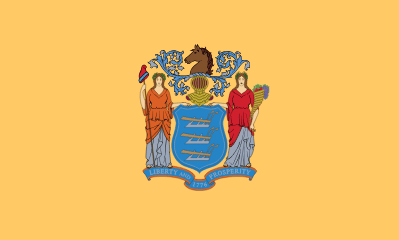
New Jersey DGE
A law enforcement division inside the attorney general’s office, paired with the Casino Control Commission. It issues the one-year internet gaming permit and fields your online dispute.
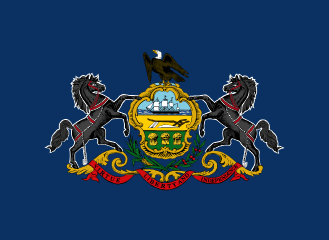
Pennsylvania PGCB
A dedicated independent gaming board. Interactive gaming licenses run five years under 58 Pa. Code Chapter 803a, and revenue is published for every brand every month.
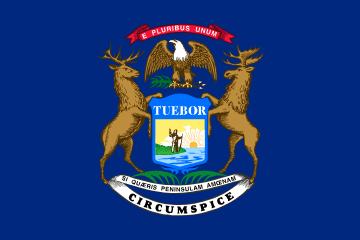
Michigan MGCB
A dedicated board sitting administratively inside the Department of Treasury. Fifteen commercial and tribal operators are authorized, all fifteen offering iGaming on five-year licenses.
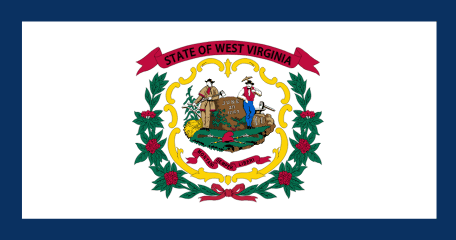
West Virginia Lottery
A lottery agency that licenses private casinos rather than running the games itself, with a statutory ceiling of five licensees, one per gaming facility.
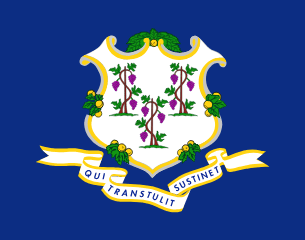
Connecticut DCP
The Gaming Division of a consumer protection department, supervising a tribal compact market that holds exactly two online casino licensees and not one more.
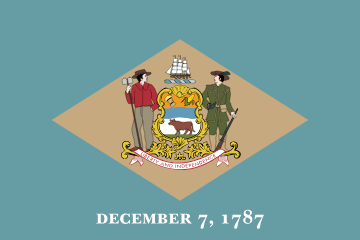
Delaware Lottery
Lottery-controlled, with the state itself holding the gambling authority. Three video lottery agents share one platform under the Department of Finance.
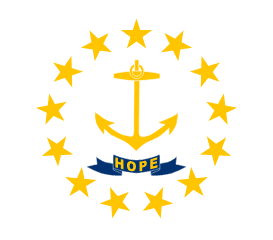
Rhode Island Lottery
The Lottery holds the interactive gaming license and Bally’s runs the product under contract, with the Department of Business Regulation supervising the casino side.
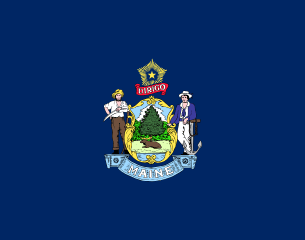
Maine Gambling Control Unit
A bureau of the Department of Public Safety writing internet gaming rules under LD 1164. Authorized, but it has not licensed a single operator yet.
Nevada Gaming Control Board
Licenses interactive poker only. Nevada has never authorized online blackjack, yet its two-tier model from 1955 is the template every other agency here borrowed.
Agency type, launch, licensee count and complaint route
| State | Agency | Agency type | Online casino launch | Licensed online casino operators | License term | Complaint route |
|---|---|---|---|---|---|---|
| New Jersey | Division of Gaming Enforcement, plus the Casino Control Commission | Split model: law enforcement division inside the Office of the Attorney General, paired with an independent licensing commission | November 2013 | Nine casino hotels hold internet gaming permits, each running multiple branded sites | Internet gaming permit runs one year, renewed annually | Casino first, then a DGE internet gaming dispute form |
| Pennsylvania | Pennsylvania Gaming Control Board | Dedicated independent gaming board | July 2019 | 11 casino operators reported interactive gaming revenue in July 2026 | Interactive gaming license valid five years | Operator first, then a PGCB form within 30 days |
| Michigan | Michigan Gaming Control Board | Dedicated board, administratively within the Department of Treasury | Jan. 22, 2021 | 15 commercial and tribal operators authorized, all 15 offering iGaming | Internet gaming operator license valid five years, renewable in five-year terms | Operator first with at least 10 days to answer, then MGCB |
| West Virginia | West Virginia Lottery Commission | Lottery agency licensing private casinos | July 2020 | Statutory ceiling of five licensees, one per gaming facility | Five years for $250,000, renewable in five-year terms for $100,000 | Operator first, then the Lottery receives the file |
| Connecticut | Department of Consumer Protection, Gaming Division | Consumer protection department regulating a tribal compact market | Oct. 19, 2021 | Two, one for each tribal master wagering licensee | Master wagering license tracks the compact amendment, 10 years with a five-year option; operator licenses renew annually | Operator first, then a DCP consumer complaint |
| Delaware | Delaware Lottery, within the Department of Finance | Lottery-controlled, state holds the gambling authority | November 2013 | Three video lottery agents sharing one state platform | Video lottery agent license is a personal privilege, not transferable | Delaware Lottery, through the agent’s site |
| Rhode Island | Rhode Island Lottery, with the Department of Business Regulation | Lottery-controlled with a single contracted operator | March 5, 2024 | One, Bally’s, under contract to the Lottery | Contract-based exclusivity rather than an open license round | Operator first, then DBR Gaming and Athletics |
| Maine | Gambling Control Unit, a bureau of the Department of Public Safety | Public safety bureau, tribal exclusivity | Not live | None yet | Rules still in progress | Gambling Control Unit |
| Nevada | Nevada Gaming Control Board and Nevada Gaming Commission | Two-tier independent model, investigators plus a lay commission | No online casino | None; interactive gaming is limited to poker | Interactive gaming license fee covers the first two years, then an annual fee | Board’s Enforcement Division handles patron disputes |
The rest of the licensing hub
Regulators are one half of the picture. These pages cover the paperwork, the labs and the punishments.
Four Structural Models, and What Each One Means at the Table
The nine agencies fall into four shapes, and the shape decides your choice of brands and your route to a human.
The Independent Gaming Regulator
New Jersey and Pennsylvania run the version most people picture. A standing agency exists for the single purpose of gambling oversight, staffed by investigators, auditors and lab technicians, funded largely by the industry it polices, and answerable to the governor and legislature rather than to a broader consumer or revenue department. The Pennsylvania Gaming Control Board oversees 18 land-based casinos, six of them at racetracks, five stand-alone, two at resorts and five mini-casinos, and it licenses the interactive product separately from the building. Its interactive gaming licenses run five years under Chapter 803a of Title 58 of the Pennsylvania Code, with renewal applications due six months before expiry.
Practical consequence: these agencies publish. Pennsylvania posts revenue for every casino brand every month, which is how anyone can confirm the July 2026 numbers below. That paper trail is what lets a player check whether a site is real, whether it is growing or dying, and whether it has been fined. Follow the same trail through published enforcement actions before you deposit anywhere.
The Lottery-Controlled Model
Delaware and Rhode Island took a different route. In both, the state itself is the gambling operator as a matter of law, and the private company you see in the app store is a vendor. Delaware’s statute puts the Director of the State Lottery Office, appointed by the Secretary of Finance, in charge of internet ticket games, internet video lottery and internet table games, delivered through the websites of the three licensed video lottery agents, currently Delaware Park, Bally’s Dover and Harrington.
Rhode Island is tighter still: the interactive gaming license sits with the Rhode Island Lottery, Bally’s runs the product under contract, and the Department of Business Regulation supervises the casino side. The state auditor general reported 272 online slot games and six live table games, among them blackjack, roulette and speed baccarat, as of June 30, 2025.
What the lottery model gives you
- A single, tightly audited product, so the odds of a fly-by-night brand are essentially zero.
- The state holds the gambling authority itself, which puts the regulator and the license holder in the same building.
- A complaint route that ends at a state agency rather than a foreign licensor.
What it takes away
- Almost no choice. Rhode Island players have one online casino.
- Delaware players have one platform behind three storefronts.
- No shopping around for a better blackjack rule set and no competitive bonus market.
- If you dislike the house rules, your alternative is a drive. Compare that with New Jersey, where a dozen brands fight over the same customer.
The Consumer Protection Department
Connecticut folded online gambling into the Department of Consumer Protection, the same agency that handles licensed trades, drug control and consumer complaints generally. Chapter 229b of the Connecticut General Statutes authorizes three master wagering licensees: the Mashantucket Pequot Tribe, the Mohegan Tribe of Indians of Connecticut and the Connecticut Lottery Corporation. Only the two tribal licensees may offer online casino games, which is why Connecticut has exactly two legal online casinos and not one more.
Fast on rogue sites, slow to your turn in the queue
DCP treats an unlicensed gambling site the way it treats any deceptive business practice, and it moves fast on unlicensed operators. In 2025 it issued a summary suspension against a licensed supplier for conducting illegal gaming activity, then announced a settlement. Complaints land in the same intake queue used for every other consumer grievance in the state, which is efficient but means gambling disputes compete for attention with contractor complaints and used-car problems.
Tribal Exclusivity
Connecticut and Maine both built exclusive markets around federally recognized tribes, but they got there differently. Connecticut used amended compacts, negotiated with the tribes and approved at the federal level, so the online license is an extension of a government-to-government agreement. Maine legislated it. LD 1164 became law without Gov. Janet Mills’ signature and took effect Jan. 11, 2026, reserving online casino gaming to the four Wabanaki nations and taxing it at 18 percent of gross gaming revenue.
Exclusivity narrows the menu and the recourse
When the licensee is a sovereign nation or its wholly owned affiliate, the state regulator is enforcing terms that were negotiated rather than simply imposed, and questions of sovereign immunity can complicate a lawsuit that a player might otherwise file. The state complaint process still functions normally. The courthouse door is the part that gets more complicated. Our page on the legal status of online blackjack in the US covers the tribal gaming background in more depth.
The states behind these four models
Each model produces a different playing experience. Here is what it looks like from the player’s seat.
Why New Jersey Has Two Agencies
Almost everyone gets this wrong, and the confusion is understandable, because both bodies really do regulate the same casinos.
Division of Gaming Enforcement
The DGE is a law enforcement agency housed in the Department of Law and Public Safety under the attorney general. It describes itself as the investigative arm of the casino regulatory system. Its staff includes attorneys, accountants, investigators, State Troopers and prosecutors. DGE investigates applicants, audits casino-hotel operations, prosecutes casino-related crime, and tests slot machines, casino floor systems and internet gaming platforms. It is DGE that issues the internet gaming permit, and DGE that fields your online dispute.
Casino Control Commission
The Commission is the licensing body. Three commissioners appointed by the governor, with a staff of roughly 35, issue casino licenses and casino key employee licenses, rule on qualification questions, and hear appeals from decisions of the DGE director. In plain terms: the division builds the case, the commission decides it, and the commission also acts as the first level of appeal when the division rules against someone.
New Jersey adopted this split in the 1970s specifically to separate the investigator from the judge. It has been trimmed over the years, most notably when the state moved routine licensing work toward the division, but the two-body structure survives. The permit numbers illustrate the division of labor. Both the issuance fee and the renewal fee are set by DGE to cover its own investigative and regulatory costs. In July 2026 the nine Atlantic City casino hotels and their online partners reported $276.9 million in internet gaming win, up 12.0 percent from a year earlier.
Nevada: Not an iGaming State, Still the Rulebook
The state that invented American gaming regulation does not license a single hand of online blackjack, and never has.
You cannot legally play real-money online blackjack from Nevada
Nevada does not license online casino games. Its interactive gaming rules cover poker, and for a simple statutory reason: for interactive gaming purposes, Nevada treats poker as a non-banking game, and the authorization was drafted around that. Blackjack is banked by the house. So no matter how many Nevada casinos you can name, you cannot legally play a real-money online blackjack hand from a Las Vegas apartment. Anyone telling you otherwise is describing an offshore site. See our Nevada page for what is and is not available there.
So why does the Nevada Gaming Control Board matter to a blackjack player in Michigan or Pennsylvania? Because American gaming regulation is largely Nevada’s invention, and the newer agencies borrowed its architecture wholesale. The Legislature created the Board in 1955 inside the Tax Commission to drive organized crime out of the industry. The Nevada Gaming Commission followed in 1959 as a five-member lay body sitting above it. The Board today has three full-time members appointed to four-year terms and six divisions:
- Administration
- Audit
- Enforcement
- Investigations
- Tax and License
- Technology
Look at that list and you are looking at the template. Every regulator in the table above runs some version of those functions, often under the same names. The two-tier design, investigators recommending and a lay body deciding, is what New Jersey copied and refined. The principle that a gaming license is a revocable privilege rather than a property right, the exclusion list, the suitability standard applied to owners and financiers, the idea that the regulator certifies the technology rather than trusting the operator’s word: all of it hardened in Nevada first.
Nevada also signed the first interstate online poker compact, with Delaware, in 2014, which became the seed of the multi-state agreement that Pennsylvania joined in April 2025. Fee scale still reflects the state’s seriousness: under Chapter 463 of the Nevada Revised Statutes, an interactive gaming license costs $500,000 for the first two years and $250,000 a year thereafter.
Maine: Authorized, Regulated by Nobody Yet
Maine legalized online casino gaming, then started the slow work of writing the rules that make a license possible.
The Gambling Control Unit is a bureau within the Maine Department of Public Safety, and it already regulates casino slot machines and table games, advance deposit wagering on horse racing, charitable gaming, fantasy contests and sports wagering. Internet gaming is its newest assignment and the only one that has not produced a licensee. The sequence matters, because plenty of sites will tell you Maine is live. It is not.
LD 1164 takes effect, Jan. 11, 2026
The statute reserves online casino gaming to the four Wabanaki nations and taxes it at 18 percent of gross gaming revenue.
Initial notice of rulemaking, May 6, 2026
The unit opened its first comment window, with written comment due June 5.
Proposed Chapter 70-84 published, July 15, 2026
Draft language for Internet Gaming went out with a public hearing and a comment deadline of July 27, 2026.
Rules finalized, then applications reviewed
Both have to finish before a single hand is dealt. A realistic launch window is late 2026 or early 2027, and even that assumes the rulemaking closes cleanly.
Litigation is running alongside. Churchill Downs and the operator of Oxford Casino sued in the U.S. District Court for the District of Maine on Jan. 23, 2026, arguing the tribal-exclusive structure violates equal protection and the Commerce Clause. The Wabanaki nations intervened in April 2026.
Any Maine online casino taking deposits today is offshore
Until the unit licenses somebody, a site accepting a Maine deposit is an offshore book with no American regulator behind it. Our comparison of offshore sites against state-licensed ones explains what that costs you.
What Every One of the Nine Actually Does
Structures diverge; core duties barely do. Whatever the letterhead says, each agency performs the same six jobs.
Licensing and suitability review
Owners, executives, lenders and key employees are investigated for criminal history, financial stability and business associations. Failing this review is why some well-funded companies never appear in a given state.
Game and system approval
No blackjack variant goes live until the math, the shuffle logic and the payout tables have been reviewed and the platform tested. Most states rely on accredited independent laboratories to do the bench work, which is covered on our testing labs page and in the detail on random number generator certification.
Compliance audits and inspections
Regulators examine internal controls, cage and cash-handling procedures, geolocation performance, age verification and advertising claims, and they do it on their own schedule rather than the operator’s.
Revenue reporting and tax collection
Monthly filings feed the public revenue reports that make this industry unusually transparent. Michigan’s board reported $302.77 million in iGaming gross receipts for July 2026 alone.
Self-exclusion administration
The state, not the casino, keeps the list, which is what makes it enforceable across every licensee at once. Pennsylvania runs separate lists for casinos, iGaming, video gaming terminals and fantasy contests, and passed 20,000 voluntary casino self-exclusion enrollment requests on June 5, 2023. It also maintains an involuntary exclusion list specific to iGaming. Details on how enrollment works are on our self-exclusion guide.
Complaint handling and enforcement
Fines, license conditions, suspensions and cease-and-desist orders are the enforcement toolkit, and they are used against licensees and unlicensed sites alike.
If you want to check a specific brand rather than a specific agency, our walkthrough on verifying a license shows how to trace a site back to the permit holder listed on the regulator’s own roster, which is the only version of the roster that counts.
How the game itself gets checked
Approval of a blackjack table is a technical process. These pages explain what the labs and the reports actually measure.
How to Escalate a Complaint
Every regulated state follows the same two-step logic, and skipping step one gets your file bounced.
Step one is always the operator
Michigan will not consider a complaint about an internet gaming violation or a terms-of-service dispute until you have filed a written complaint with the operator or platform provider and given it at least 10 days to respond. New Jersey’s instructions are equally blunt: every complaint must be filed with, and answered by, the casino permit holder before an internet dispute form goes to the division.
Step two is the regulator
Send the original complaint, the operator’s reply, screenshots, transaction records and account statements. Regulators are documentation machines. A dated bet history and a bank record will move a file; a summary of your frustration will not.
Then the file gets a handler and a clock
Michigan assigns a case number and a regulation officer to each dispute. Nevada splits its process by amount, with smaller patron disputes decided by a designated hearing examiner and larger ones going to the Board itself, and an appeal window follows the written decision.
Deadlines and paperwork differ by state
Pennsylvania requires the same first move, then a 30-day window to bring the matter to the board. Connecticut, West Virginia and Rhode Island all expect the operator’s written response to travel with your file.
Our step-by-step guide to filing a complaint lays out what to include and where to send it in each state, and the companion page on dispute resolution covers what happens after the file lands, including timelines, appeals and the point at which a regulator’s involvement ends and a lawyer’s begins.
Know what you are owed before you file
A regulator will act on a rule violation. Knowing which category your problem falls into saves weeks.
What Regulators Will Not Do for You
Being honest about the limits is more useful than overselling the protection.
What a license does certify
- That the game behaves as advertised and that the house edge is the disclosed one.
- That the math, the shuffle logic and the payout tables were reviewed before the table went live.
- That the operator files monthly revenue reports a player can read.
- That a self-exclusion request is held by the state and enforceable across every licensee at once.
What it certifies nothing about
- Your session. Approved blackjack still has an edge, and a 6 to 5 table has a much worse one than a 3 to 2 table, which is entirely legal and entirely your problem to notice. Read the payout comparison before you sit down.
- Every disagreement. Regulators enforce statutes, rules and approved internal controls. If an operator applied its published bonus terms correctly and you simply dislike those terms, most agencies will close the file. That is a contract dispute, not a rule violation, which is why our page on bonus terms exists.
- Speed. Investigations take weeks, sometimes longer. If a withdrawal has been sitting for three days, the complaint form is not yet your best tool.
They will not chase an offshore site for you
This is the hard one. A state regulator’s jurisdiction stops at its licensees. If you deposited with a site licensed in Curacao or nowhere at all, no American agency is going to recover your balance, because the operator never accepted that authority and holds no license to lose. Regulators do act against these companies, and the action tends to be aimed at the market rather than at your account: Connecticut issued a cease-and-desist to a major offshore brand on June 14, 2024, and the brand switched Connecticut off the following month. That protects future players. It does not refund past ones. What offshore paperwork is genuinely worth is dissected on our page about offshore licenses.
One last limit
Regulators cannot fix what you never report. Patterns in complaint data are what trigger the audits that catch a bad actor.
Where to Go From Here
Each of the nine agencies has its own page here, with contact details, license lookups, enforcement history and the rules that affect blackjack players.
The nine regulator pages
Contact details, license lookups, enforcement history and the specific rules that affect blackjack players.
The law that sits underneath all of them
State guides and the federal background behind every license on this page.
If gambling has stopped being entertainment
Help is free and confidential. The line to call is 1-800-697-3738. It is staffed around the clock by the National Council on Problem Gambling. Several states still mandate 1-800-GAMBLER in operator advertising, and that line also connects. Our problem gambling help resources page lists the state programs as well.
Official Sources
Every figure on this page traces to an agency publication or a state statute. These are the versions that govern.
- New Jersey: Division of Gaming Enforcement, DGE internet gaming information, Casino Control Commission FAQ, July 2026 revenue results
- Pennsylvania: PGCB July 2026 revenue release, patron dispute and complaint forms, 58 Pa. Code Chapter 803a, self-exclusion enrollment milestone
- Michigan: MGCB July 2026 iGaming report, patron disputes, internet gaming and fantasy contests
- West Virginia: W. Va. Code 29-22E-6, interactive wagering licenses
- Connecticut: Conn. Gen. Stat. Chapter 229b, DCP Gaming Division, 2025 summary suspension release
- Delaware: Delaware Lottery iGaming, 29 Del. C. Chapter 48
- Rhode Island: DBR Gaming and Athletics, Rhode Island Lottery audit, fiscal 2025
- Maine: Gambling Control Unit, internet gaming rulemaking docket
- Nevada: Gaming Control Board, NRS Chapter 463
Checked against agency publications and state statutes on Aug. 25, 2026. Regulator rosters and revenue figures change monthly; the official pages linked above are the versions that govern.
