
Maine Blackjack Sites: Legal Online Blackjack in Maine
Maine wrote online blackjack into law, then stopped short of opening the market, so the state is legal on paper and empty in practice.
The short answer
- Status: legal but not live. No hand has been dealt.
- Governing law: LD 1164, Public Law 2025, Chapter 538.
- Became law: Jan. 11, 2026, without Gov. Janet Mills’ signature.
- Effective: July 29, 2026.
- Blackjack named: yes, the statute lists blackjack alongside roulette and poker.
- Regulator: Maine Gambling Control Unit, Department of Public Safety.
- Who can be licensed: the four Wabanaki Nations only.
Are Online Blackjack Sites Legal in Maine?
Yes. Online blackjack is legal in Maine. No, you cannot play it yet at a licensed site. Both statements are true at once.
Legal, but not live
LD 1164 took effect July 29, 2026
LD 1164 became law without Gov. Janet Mills’ signature on Jan. 11, 2026, as Public Law 2025, Chapter 538, and took effect July 29, 2026. Legalization created a licensing pathway, not an open market.
Blackjack is named in the statute
Title 8, Chapter 39
The statutory definition of internet gaming names blackjack explicitly, alongside roulette and poker, as an authorized internet table game. Online slots are covered too. Each individual variant still needs the director’s written approval.
Four tribes, four platforms, no more
Exclusive to the Wabanaki Nations
Only the Passamaquoddy Tribe, the Penobscot Nation, the Mi’kmaq Nation and the Houlton Band of Maliseet Indians may hold an internet gaming operator license, and each may contract with just one platform operator. Maine’s two commercial casinos are excluded entirely.
Nothing is licensed and nothing is certified
As of August 2026
No final rules have been adopted, no license application has been approved, no platform has been certified and no game has been approved. Churchill Downs’ Oxford Casino sued in federal court in January 2026, and Penn Entertainment has also challenged the model.
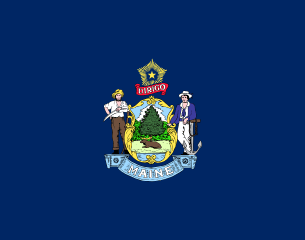
Maine: legalized, not launched
Maine is one of only eight states where real money online casino gaming has been written into law, and blackjack is specifically covered by that law. What Maine does not have yet is a single licensed site where you can sit down and play a hand. That gap between legal and live is the whole story of online blackjack in Maine right now, and it is the reason so much of what you will read elsewhere is either out of date or flatly wrong.
The law is LD 1164, “An Act to Create Economic Opportunity for the Wabanaki Nations Through Internet Gaming.” It passed the Maine Legislature in June 2025, became law without Gov. Janet Mills’ signature on Jan. 11, 2026, and took effect July 29, 2026. It gives Maine’s four federally recognized tribes the exclusive right to run online casinos, taxes their adjusted gross internet gaming receipts at a rate published sources report as either 16 percent or 18 percent, and hands regulatory authority to the Maine Gambling Control Unit. It also names blackjack, roulette and poker as authorized internet table games.
What has not happened is rulemaking. The Gambling Control Unit published proposed regulations in July 2026 and held a public hearing in Augusta, but as of August 2026 no final rules have been adopted, no license applications have been approved, and no platform has been certified. Add an unresolved federal lawsuit from one of Maine’s two commercial casinos and you get a market that exists on paper and nowhere else. This page walks through exactly where things stand, what the law says, who regulates it, what the tax structure looks like, why sweepstakes sites went dark in Maine this summer, and what to expect when the first Maine blackjack sites actually open. For coverage of other states, see our full index of online blackjack by state.
Legalization created a licensing pathway, not an open market. The state still has to finish writing rules, process license applications, run background investigations, certify gaming platforms through an independent testing lab and approve each individual game before a single wager can be accepted. Anyone telling you a Maine blackjack site is live today is selling something.
What is legal in Maine right now
- Live blackjack at Maine’s two commercial casinos, Hollywood Casino Bangor and Oxford Casino, for players 21 and older.
- Online sports betting through DraftKings and Caesars, both operating under tribal licenses since November 2023.
- Free-to-play social casino games that use a single virtual currency with no cash redemption.
- The Maine State Lottery, charitable gaming, fantasy contests and pari-mutuel harness racing wagering.
What is not available yet
- Any licensed real money Maine blackjack site or app. Zero platforms have been approved.
- Live dealer blackjack streamed to Maine players by a licensed operator.
- Online blackjack tournaments, jackpot side bets or casino bonuses from a Maine-licensed brand.
What Is Now Prohibited
- Dual-currency sweepstakes casinos. Banned under a separate law that took effect the same day the iGaming law did.
- Funding an internet gaming account with a credit card. Prohibited by both statute and the proposed rules.
- Offshore online casinos. These have never been licensed in Maine and remain unregulated.
Maine Online Blackjack at a Glance
| Question | Answer |
|---|---|
| Is online blackjack legal in Maine? | Yes, under Title 8, Chapter 39 |
| Governing law | LD 1164, Public Law 2025, Chapter 538 |
| Date enacted | Jan. 11, 2026, without the governor’s signature |
| Effective date | July 29, 2026 |
| Are any sites live? | No. Rulemaking is not finished |
| Expected launch | Late 2026 at the earliest, more likely 2027 |
| Regulator | Maine Gambling Control Unit, Department of Public Safety |
| Who can hold a license | The four Wabanaki Nations only |
| Maximum platforms | Four |
| Tax rate | Reported as either 16 percent or 18 percent of adjusted gross internet gaming receipts. Neither figure is confirmed |
| Minimum age | 21 |
| Sweepstakes blackjack | Banned as of July 29, 2026 |
| Live blackjack in person | Yes, at two commercial casinos |
Understand the rules before Maine opens
Four guides that explain what the law actually permits, who has to be where, and how a legalized market turns into a live one.
Legal Online Blackjack Sites That Accept Maine Players
There are none. Not one licensed Maine blackjack site is accepting players as of August 2026.
No Maine online casino license has been issued
Maine’s legalization generated a wave of coverage in early 2026, and a lot of that coverage has aged badly. Any site presenting itself as a licensed Maine online casino today is not licensed. The Gambling Control Unit has not issued a single internet gaming operator license, and under the proposed rules the Unit is required to publish an approved list of internet games on its own website once the market opens. Until that list exists, there is nothing to sign up for.
Why There Are No Maine Blackjack Sites Yet
Legalization and launch are separate processes. LD 1164 directed the director of the Gambling Control Unit to adopt rules governing game types, security, patron protection, advertising and licensing. That rulemaking has to run its full course before applications can be processed. Here is the sequence the state has actually followed.
May 6, 2026
The Gambling Control Unit filed its initial Notice of Rulemaking for internet gaming, with written comment due June 5.
July 15, 2026
The Unit published the full proposed text of Chapters 70 through 84 along with a notice of public hearing in Augusta.
July 27, 2026
The written comment deadline closed.
As of August 2026
The public hearing has been held. No final rules have been published on the Unit’s I-Gaming statute and rules page.
Once rules are adopted, each tribe has to apply, each management services provider has to apply separately, background investigations have to be completed, contracts between tribes and platform partners have to be approved by the director, and every platform has to be certified by a director-approved independent testing laboratory. Each of those steps takes weeks or months.
A complicating factor is scale. The Gambling Control Unit is a small agency housed within the Department of Public Safety, and it was not built to stand up a multi-platform iGaming market. Executive Director Milton Champion told the Legislature’s Veterans and Legal Affairs Committee earlier in 2026 that he intended to build out staff for the rulemaking process once the law took effect, and expressed confidence the process could move relatively quickly.
Operators Expected to Launch in Maine
Three of the four available licenses are effectively spoken for. Because the law caps each tribe at one platform partner, four is the absolute ceiling on the number of Maine blackjack sites that will ever exist under the current framework. There is no path for a fifth brand without new legislation.
| Wabanaki nation | Announced iGaming partner | Status |
|---|---|---|
| Houlton Band of Maliseet Indians | Caesars Entertainment | Agreement announced June 24, 2026. Not licensed |
| Mi’kmaq Nation | Caesars Entertainment | Agreement announced June 24, 2026. Not licensed |
| Penobscot Nation | Caesars Entertainment | Agreement announced June 24, 2026. Not licensed |
| Passamaquoddy Tribe | None announced | Partners with DraftKings on sports betting. Nothing confirmed for iGaming |
The only brand with signed Maine iGaming agreements, and it still cannot take a wager

1. Caesars Entertainment
On June 24, 2026, Caesars Entertainment announced it was expanding its existing Maine partnership with three Wabanaki Nations, the Houlton Band of Maliseet Indians, the Mi’kmaq Nation and the Penobscot Nation, to include online casino gaming. Under that agreement Caesars plans to bring three brands to the state: Caesars Palace Online Casino, Caesars Sportsbook and Casino, and Horseshoe Online Casino.
Eric Hession, president of Caesars Digital, framed the deal as a continuation of the sports betting relationship the company built with those same three tribes starting in 2023. Caesars has said publicly it hopes to deploy in 2026, pending regulatory approval, and has indicated its Maine platforms will include live dealer products. None of that is available to Maine players today, and none of it can be until the Gambling Control Unit adopts final rules and issues licenses.
How the Four Tribal Licenses Work
The structure inverts how most U.S. online casino markets operate. In New Jersey or Michigan, the commercial operator holds the license and pays a fee to a land-based partner. In Maine, the tribe is the licensed operator, and the commercial brand is a management services provider working under contract. Key licensing terms drawn from the statute and the proposed rules:
- Each of the four federally recognized tribes may hold one internet gaming operator license.
- Each licensee may contract with no more than one management services provider.
- The initial internet gaming license fee is $50,000, with the same amount due at annual renewal.
- A management services license costs $10,000, a supplier license $10,000 and an occupational license $250.
- Operators post a nonrefundable $5,000 background investigation deposit. Management services providers and suppliers post $10,000. Investigative time is billed at up to $250 per hour.
- Operators must post a $500,000 bond and maintain a segregated reserve account covering all player balances and unpaid winnings.
- Operators must carry cyber liability and errors-and-omissions insurance of $5 million each, rising to $10 million each for operators projecting more than 100,000 accounts and $15 million in revenue.
- The proposed rules cap what a management services provider can take at 20 percent of adjusted gross internet gaming receipts if it already operates sports wagering in Maine, though the director may approve up to 40 percent if the provider demonstrates the higher share is commercially reasonable given its capital investment.
Expected Launch Window for Maine Blackjack Sites
Late 2026 is possible. Early 2027 is the more commonly cited projection. A late 2026 launch would require both the rulemaking process and the platform build-out to move faster than comparable launches have in other states, with final rules adopted in the fall and licensing and certification compressed into a very tight window. Anything that slips pushes the first Maine blackjack sites into 2027.
How to Spot a Real Maine Blackjack Site
Until the market opens, the test is simple: there are no legitimate options, so any real money online blackjack offer aimed at Maine players is unlicensed. Once launch happens, these are the markers of a licensed site under the proposed rules:
- It operates under one of the four Wabanaki Nations’ licenses and says so.
- It appears on the Gambling Control Unit’s approved list.
- It runs geolocation checks and will not accept a wager unless you are physically in Maine.
- It requires full identity verification including legal name, date of birth, Social Security number or equivalent, and a residential address. A P.O. box is not accepted.
- It enforces a 21-and-older age minimum and displays that requirement conspicuously.
- It refuses credit card deposits.
- It carries responsible gaming messaging and the 1-800-GAMBLER helpline number in type no smaller than the majority of the surrounding text.
- It provides a link to the Gambling Control Unit’s website for complaints.
How to tell a licensed site from an unlicensed one
With no Maine license in existence, every real money offer aimed at Maine players today fails the licensing test. Here is how to check one for yourself.





Is Online Blackjack in Maine Legal Under State Law?
LD 1164 created a new chapter of Maine law that names blackjack directly, restricts licensing to four tribal governments and sets 21 as the floor.
What LD 1164 Authorized
LD 1164 created a new chapter of Maine law, Title 8, Chapter 39, “Regulation of Internet Gaming,” running from section 1401 through section 1417. The chapter authorizes each federally recognized Indian nation, tribe or band in Maine to operate internet gaming under a license from the Gambling Control Unit, establishes license categories for operators, suppliers, management services providers and employees, clarifies that internet gaming is not a game of chance under certain other statutes, and directs the director to adopt implementing rules.
You can review the bill history and chaptered law through the Maine Legislature’s LD 1164 page, and the statute and rules through the Gambling Control Unit’s I-Gaming statute page.
Blackjack is named in the statute, not just implied
The law authorizes internet-based table games, and blackjack is repeatedly named alongside poker and roulette in the statutory framework and in the state’s own description of what the market will offer. Online slots are also covered, a point that caused some confusion during floor debate, where at least one lawmaker who worked the bill in committee was under the impression slots were excluded.
That said, individual games still require approval. Under proposed Chapter 77, an operator may not offer any internet game unless the director has approved it in writing beforehand, and any new game core mechanic requires a petition filed at least 30 business days in advance with evidence of independent testing lab certification. So while blackjack as a category is authorized, each specific blackjack variant a site wants to run has to clear the director’s desk.
Who Can Hold a License
Only the Passamaquoddy Tribe, the Penobscot Nation, the Houlton Band of Maliseet Indians and the Mi’kmaq Nation. Maine’s two commercial casinos are excluded entirely, which is the basis of the litigation described later on this page.
Legal Age for Online Blackjack in Maine
Twenty-one. The proposed rules define a “patron” as someone 21 or older who is physically present in Maine at the time of the wager, not prohibited from wagering under Maine statute and not a prohibited participant. Operators must verify age at registration and record the patron’s acknowledgment that 21 is the legal minimum. Anyone who lets another person use their account can be placed on the involuntary exclusion list.
Twenty-one is also the minimum for blackjack at Maine’s land-based casinos and for sports betting. The age drops to 18 for the lottery, bingo, fantasy contests and pari-mutuel horse race wagering.
Where You Have to Be to Play
Inside Maine. All wagers must be initiated, received and otherwise made within the state. The rules cite the Unlawful Internet Gambling Enforcement Act of 2006 in noting that intermediate routing of data does not change where a lawful intrastate wager takes place. Operators must also run their primary wagering server inside Maine, in a location with security, access controls and 24-hour surveillance.
The federal law sitting behind Maine’s tribal model
Maine’s framework is unusual because the federal tribal gaming statute does not reach the Wabanaki Nations. These guides explain why that matters.
Who Regulates Online Blackjack in Maine
Four bodies share the work: a small unit inside a police department, a five-member board, a cabinet department and the tribes themselves.
The Maine Gambling Control Unit
A bureau within the Maine Department of Public Safety and the primary regulator for online blackjack in Maine. It is led by Executive Director Milton Champion and based at 45 Commerce Drive, Suite 5, in Augusta. Under Chapter 39 the director holds rulemaking authority over game types, wagering methods, payment processing, system security, advertising and responsible gaming. The director approves games, approves house rules, approves contracts between tribes and management services providers, investigates complaints, and can issue reprimands, probationary licenses, suspensions, revocations and civil penalties of up to $25,000 per violation. The main line is (207) 626-3900.
The Maine Gambling Control Board
A five-member body appointed by the governor. It has historically overseen slot machines and table games at the commercial casinos and advance deposit wagering. Under the internet gaming framework, the board maintains the official universal exclusion list and notifies operators of additions and deletions.
The Department of Public Safety
The department houses the Gambling Control Unit. The commissioner of public safety hears appeals of the director’s decisions, both in patron disputes and in disciplinary matters. A party aggrieved by the commissioner’s final decision may appeal to Maine Superior Court under the Maine Administrative Procedure Act.
Tribal oversight
Because the tribes are the licensed operators rather than the licensors, oversight is shared. The regulatory model deliberately mirrors Maine’s existing online sports betting framework, where the same four nations hold the licenses and commercial brands operate under contract. What Maine does not have is the Indian Gaming Regulatory Act framework that governs tribal gaming in most other states.
Maine’s own gaming board asked the governor to veto the law
On Dec. 17, 2025, Chair Steven Silver wrote to Gov. Mills on behalf of the full Gambling Control Board urging a veto, arguing that any qualified operator should be able to obtain an iGaming license, including the Wabanaki Nations, and that cutting Oxford and Hollywood out entirely created a monopoly harmful to consumers and to the roughly 1,000 Mainers those two properties employ. Mills allowed the bill to become law anyway.
Where Rulemaking Stands
The proposed internet gaming rules span Chapters 70 through 84 and cover introduction, definitions, license applications and fees, internal controls, house rules, cybersecurity incident reporting, system requirements, wagers, accounts, revenue reconciliation, geolocation, responsible wagering, advertising, management services contract criteria, and complaints and discipline. Filing numbers run from 2026-P100 through 2026-P114. Every chapter currently lists its effective date as “TBD.”
You can track the process on the Gambling Control Unit’s I-Gaming rulemaking page, and read the full proposed rule text directly.
Know the regulator you would be dealing with
When Maine’s market opens, the Gambling Control Unit is the body that approves games, hears complaints and can pull a license.
Maine Online Gambling Laws Explained
Five bodies of law shape online blackjack in Maine, and one of them dates to 1980 and has nothing to do with the internet.
| Law | What it does |
|---|---|
| Title 8, Chapter 39 | The operative law for online blackjack in Maine. Sets the license structure, the tax on adjusted gross internet gaming receipts, the distribution of tax revenue, the child support intercept provision at section 1415, and the director’s authority to regulate the market. |
| Title 8, Chapter 31 | Governs Maine’s land-based casino industry, the slot machines and table games at Hollywood Casino Bangor and Oxford Casino. Separate from the internet gaming chapter, with different tax rates and different licensing bodies. |
| Title 17-A, sections 952 and 954 | Section 952 defines a contest of chance, and the proposed internet gaming rules borrow that definition when defining an internet game. Section 954 covers unlawful gambling. In 2026 the Legislature added subsection 954(1-B), making it unlawful gambling to operate, promote or support the operation or promotion of an online sweepstakes game. |
| Maine Indian Claims Settlement Act, 1980 | The reason Maine’s tribal gaming situation looks nothing like Connecticut’s or Oklahoma’s. The federal Indian Gaming Regulatory Act of 1988 gives tribes the right to regulate gaming on their own lands, but IGRA does not apply to the Wabanaki Nations because of the settlement act. That is why there are no tribal land-based casinos in Maine, and why the tribes pursued state legislation instead, first for sports betting in 2022 and then for internet gaming in 2025. |
Offshore sites: never licensed, and LD 1164 changed nothing
Offshore online casinos advertising blackjack to Maine residents hold no Maine license and never have. In June 2025 the Gambling Control Unit issued a public warning stating plainly that no online casino, iGaming or sweepstakes site was authorized to operate in the state, and describing these operations as frequently based out of state or out of the country and lacking any regulatory oversight in Maine. Nothing about LD 1164 changed that. If anything, the licensed framework makes the distinction sharper.
Maine Online Blackjack Timeline: Bills That Passed and Failed
Four years from the sports betting template to an effective iGaming law, with one failed bill and one abandoned ballot campaign in between.
| Date | Development |
|---|---|
| 2022 | Gov. Mills signed LD 585, granting Maine’s four federally recognized tribes exclusive rights to operate mobile sports betting. The Legislature amended the Settlement Act to permit it, and the House approved the framework 82-42. Commercial casino licensing was limited to retail wagering only, establishing the tribal-exclusive online template LD 1164 would later copy. |
| November 2023 | Maine’s online sportsbooks went live with two operators. DraftKings partnered with the Passamaquoddy Tribe and Caesars partnered with the other three nations. Sports betting revenue is taxed at 10 percent. Despite the law permitting up to four platforms, only two ever launched, a point FanDuel later raised in testimony against LD 1164. |
| 2023 and 2024 | Lawmakers considered LD 1777, which would have authorized online casino gaming under the same tribal exclusivity model. In January 2024 the bill was under active consideration. In April 2024 the House voted it down. The Senate revived it with a motion to reconsider, and the House rejected it a second time by five votes, ending the effort. |
| March 2025 | LD 1164 was referred to the Committee on Veterans and Legal Affairs on March 20, 2025. It drew relatively little attention at first before resurfacing during a special session focused on the state budget. |
| May 2025 | Committee Amendment C-A (H-393) addressed the tax on adjusted gross internet gaming receipts, moving it from the 16 percent in the bill as introduced to 18 percent, and revised the distribution of that revenue. Both figures remain in circulation in published coverage and neither has been confirmed against the enacted text. |
| June 2025 | The House passed LD 1164 by a vote of 85-59. The Senate split, tabled the bill, then took it back up. An attempt to reject it failed 17-18, and the Senate passed it without a roll call. A later motion to reconsider failed by the same 17-18 count. |
| July 2025 to January 2026 | Mills declined to sign or veto before the session ended. Under Maine law the governor cannot act on legislation while lawmakers are out of session, so LD 1164 sat in limbo for roughly six months alongside 60 other bills. |
| Dec. 17, 2025 | The Maine Gambling Control Board sent Mills a unanimous letter urging her to veto the bill, arguing the exclusion of the commercial casinos was ill-advised and created a harmful monopoly. |
| Jan. 8 to Jan. 11, 2026 | On Jan. 8, Mills announced she would allow LD 1164 to become law without her signature, one of 52 of 61 held bills she released. She cited meetings that fall with the elected chiefs of the Wabanaki Nations and said that while she had concerns about gambling’s public health impacts, she believed this form of gambling should be regulated. The bill was formally enacted Jan. 11, 2026, unsigned, as Public Law 2025, Chapter 538, making Maine the eighth state to authorize regulated online casino gaming. Her office’s announcement is posted here. |
| Jan. 23, 2026 | Churchill Downs’ Oxford Casino Hotel filed a federal complaint in the U.S. District Court for the District of Maine challenging the tribal-exclusive structure. |
| April 1, 2026 | All four Wabanaki Nations filed a joint motion to intervene in the Oxford lawsuit, calling it a constitutional attack on the statute and arguing it targeted the nations’ ability to generate revenue for tribal governmental services. |
| April 6, 2026 | Mills signed LD 2007, prohibiting dual-currency online sweepstakes games. She signed LD 2080 in the same window, restricting the use of credit cards to fund online sportsbook and iGaming accounts. |
| April 29, 2026 | The Second Regular Session of the 132nd Legislature adjourned sine die at 8:32 p.m., setting the general effective date for non-emergency laws at July 29, 2026, 90 days later. |
| May to July 2026 | The Gambling Control Unit filed its initial notice May 6 with comment due June 5, then published the full proposed text of Chapters 70 through 84 on July 15 with a public hearing and a July 27 comment deadline. |
| June 24, 2026 | Caesars Entertainment announced the expansion of its Wabanaki partnership to include online casino gaming, locking up three of the four available licenses. |
| July 29, 2026 | LD 1164 and LD 2007 took effect the same day, alongside close to 300 other measures from the session. Online casino gaming became legal in Maine. Sweepstakes casinos became unlawful gambling. |
| August 2026 | No final rules. No licenses issued. No platforms certified. No launch date announced. The Oxford lawsuit is unresolved, and no court has enjoined the law. |
Where Maine sits among the legal states
Maine is the eighth state to authorize online casino gaming and the only one still waiting on its first licensed site.
Tribal Gaming and Maine Blackjack Sites
Four nations locked out of the gaming economy for 40 years now hold every online casino license Maine will issue.
Passamaquoddy Tribe
Includes communities at Indian Township and Pleasant Point. Partners with DraftKings on sports betting and remains unpaired for iGaming. Chief William Nicholas Sr. called Mills’ decision a defining moment for the Wabanaki Nations.
Penobscot Nation
Holds a Caesars Entertainment iGaming agreement. Chief Kirk Francis pointed to the sports wagering relationship as evidence of a partner that respects tribal sovereignty.
Houlton Band of Maliseet Indians
Holds a Caesars agreement. A 2018 attempt by the band to win approval for a casino was rejected by the Maine House 73-67. Chief Clarissa Sabattis framed LD 1164 in terms of building independent, long-term revenue sources not dependent on federal funding.
Mi’kmaq Nation
Also known as the Aroostook Band of Micmacs. Holds a Caesars agreement. Chief Sheila McCormack described the revenue as enabling businesses her nation could not previously start.
Why the Tribes Have Exclusivity
The short answer is that Maine’s tribes were locked out of the gaming economy for four decades and the Legislature chose gaming as the remedy. The Indian Gaming Regulatory Act of 1988 grants federally recognized tribes the right to regulate gaming on their lands. Because of the 1980 Maine Indian Claims Settlement Act, IGRA does not apply in Maine, and the Wabanaki Nations could not open casinos on their own territory the way tribes in other states did. Tribal leaders shifted strategy toward digital gaming, and it worked twice: sports betting in 2022 and internet gaming in 2025.
The Oxford Casino Lawsuit
This is the largest open question hanging over Maine blackjack sites. Oxford Casino Hotel, owned by Churchill Downs, filed suit Jan. 23, 2026, naming Gambling Control Unit Executive Director Milton Champion as defendant. The case is Oxford Casino Hotel et al. v. Champion, in the U.S. District Court for the District of Maine.
Oxford’s core argument is that Maine sanctioned what it calls a race-based monopoly, violating the Equal Protection Clauses of both the U.S. and Maine constitutions. The complaint also raises a dormant commerce clause claim, contending the structure discriminates against out-of-state businesses. Oxford has said the state should allow anyone to compete for an iGaming license without regard to race or citizenship. Penn Entertainment, which operates Hollywood Casino Bangor, has also challenged the model.
The economic claims in the filing are specific. Oxford cites industry research indicating online casinos reduce land-based casino revenue by roughly 16 percent, and projects about $60 million in lost economic value statewide.
The four Wabanaki Nations moved to intervene on April 1, 2026. Their filing characterized the suit as a constitutional attack that targets the nations’ ability to generate revenue needed to deliver governmental services to their citizens.
Critically, no court has granted an injunction. The law took effect on schedule, rulemaking has continued, and Caesars proceeded with its partnership announcement while the case was pending. But the suit is unresolved, and a ruling against the state could force the framework to be rewritten.
The People’s Veto That Never Happened
The National Association Against iGaming, whose members include Churchill Downs, announced immediately after Mills’ decision that it would pursue a people’s veto to overturn the law at the ballot box. A people’s veto in Maine is a constitutional mechanism under Article IV, Part Third, Section 17 that lets voters repeal legislation before it takes effect. Organizers would have needed roughly 67,682 valid signatures within 90 days. Details of the process are posted by the Maine Secretary of State.
The campaign never materialized. Signature gathering in a state as rural as Maine typically requires one of a small number of specialized political firms, and DraftKings reportedly contracted with several of those firms preemptively, driving up the cost of any veto campaign. NAAiG said it reviewed every available option and that its path to a people’s veto was effectively blocked. The group has argued the timing of Mills’ reversal, which came during her since-suspended U.S. Senate campaign, was a political calculation, and pointed to polling showing online casino gaming was unpopular with Maine voters.
Maine Online Blackjack Tax Rate
The rate operators will pay is one of the few numbers in this law that published sources still disagree about.
16 percent or 18 percent: treat both as reported, not confirmed
Maine taxes adjusted gross internet gaming receipts from online blackjack and every other authorized internet game. The bill as introduced set the rate at 16 percent, and Committee Amendment C-A moved it to 18 percent. Published coverage still cites both figures, and neither has been confirmed against the enacted text. Do not plan around a single number until the Gambling Control Unit publishes final rules.
One detail is not in dispute and matters more than the headline rate. Free play, sign-on bonuses and other marketing promotions receive no credit against the calculation of adjusted gross internet gaming receipts. In other words, Maine taxes the full revenue figure without letting operators deduct promotional spend. That is a meaningful difference from states that permit promotional deductions, and it affects how generous Maine blackjack bonuses are likely to be at launch.
How and When Operators Pay
Under proposed Chapter 79, payments are due quarterly by 5 p.m. Eastern on April 10, July 10, Oct. 10 and Jan. 10 for the preceding quarter. Operators collect and distribute the tax to the director, who forwards it to the treasurer of state. Late payments accrue 1.5 percent interest per month on the unpaid balance, on top of any disciplinary action.
Where the Money Goes
The statute directs internet gaming tax revenue into a set of dedicated funds rather than the general fund. Allocations include:
- 2 percent of adjusted gross internet gaming receipts to a nonlapsing Gambling Control Unit administrative expenses account.
- 2 percent to the School Revolving Renovation Fund.
- A share to the Fund for a Healthy Maine.
- Gambling addiction prevention and treatment.
- Substance use and opioid use disorder programs.
- Emergency housing relief and a homes stabilization fund.
- The Maine Veterans’ Homes.
Revenue Projections
Estimates vary widely depending on source and timeframe. The spread reflects genuine uncertainty about launch timing and market size in a state of 1.4 million people.
How It Compares
| Maine gambling vertical | Tax rate |
|---|---|
| Online casino, including blackjack | Reported as 16 percent or 18 percent. Not confirmed |
| Online sports betting | 10 percent |
| Land-based table games, including blackjack | 16 percent |
| Slot revenue at Oxford Casino | 46 percent |
| Slot revenue at Hollywood Casino Bangor | 39 percent |
Whichever figure is correct, the reported iGaming rate sits comfortably in the middle of the national range for online casino taxes.
Do Maine Players Pay Tax on Blackjack Winnings
Gambling winnings are taxable income at both the federal and Maine state level. Maine also has a child support intercept provision written into Chapter 39 at section 1415, requiring operators to intercept internet gaming winnings to satisfy child support debt. This page is not tax advice, and anyone with a significant win should talk to a tax professional.
What the tax structure will mean for your bankroll
Maine taxes promotional play with no deduction, which shapes bonuses before the market even opens.
Sweepstakes Blackjack Sites for Maine Players
The workaround that filled the gap in unregulated states became unlawful gambling in Maine on the same day iGaming became legal.
Dual-currency sweepstakes casinos are illegal in Maine
The ban took effect July 29, 2026. If you had a sweepstakes account and found it closed or geo-blocked this summer, this is why. The law is LD 2007, “An Act Regarding the Prohibition of Online Sweepstakes Games,” introduced as SP 825 and now codified as Public Law 2025, Chapter 645. You can read the bill text through the Maine Legislature.
What the Law Prohibits
LD 2007 targets a specific business model rather than sweepstakes generally. An online sweepstakes game under the law is one that operates online, uses a dual-currency system of payment, and simulates casino-style gaming, including slot machines, poker and other table games, lottery games, bingo or sports wagering.
“Dual-currency system of payment” is the operative phrase. It captures the standard gold coin and sweeps coin structure: one currency you buy for entertainment, a second currency you can redeem for cash or prizes. Blackjack offered under that structure falls squarely inside the definition.
The law reaches beyond operators. It is a violation to operate, promote or support the operation or promotion of an online sweepstakes game. That language pulls in affiliates and marketing partners, not just the platforms themselves.
Timeline of the Maine Sweepstakes Ban
June 9, 2025
The Gambling Control Unit issues a public warning that no online casino, iGaming or sweepstakes site is authorized in Maine, and follows with cease-and-desist letters.
December 2025
Sen. Craig Hickman of Kennebec sponsors the bill, submitted by the Department of Public Safety.
Jan. 14, 2026
Public hearing before the Veterans and Legal Affairs Committee.
Feb. 18, 2026
The committee votes 8-2 to advance the bill.
March 12 and March 26, 2026
The Senate passes it on March 12. The House passes it on March 26.
April 2, 2026
Final legislative passage.
April 6, 2026
Mills signs it into law, making Maine the second state in 2026 to ban sweepstakes casinos, after Indiana.
July 29, 2026
The ban takes effect. Because LD 2007 was not emergency legislation, operators had a compliance window of nearly four months, from April 6 to July 29, to exit the Maine market. Champion estimated roughly 60 sweepstakes operators were serving Maine players when the bill was signed.
Penalties
Operating or promoting an online sweepstakes game is a civil violation carrying a fine of not less than $10,000 and not more than $100,000. All fines collected go to the Gambling Addiction Prevention and Treatment Fund. A parallel provision at 17-A M.R.S. section 954(1-B) makes the same conduct unlawful gambling under the criminal code.
There is a sharper penalty for regulated companies. Any person or business holding a Gambling Control Unit or Gambling Control Board license, whether for casino, fantasy, sports wagering or charitable gambling, must have that license revoked if found to have operated or promoted an online sweepstakes game. Champion put it directly during committee discussion: an operator that chooses to run illegal sweepstakes stands a strong chance of losing its sports wagering or casino license. That provision effectively guarantees no serious operator will touch the vertical in Maine.
Free-to-play social casinos are still legal
Entertainment-only social casinos are not covered by the ban. If a platform offers a single virtual currency with no path to cash or prize redemption, it does not meet the dual-currency definition and remains legal in Maine. The distinction is redemption, not price. A free-to-play blackjack app you can spend money in but never cash out of is outside the statute’s reach.
What Maine Players Should Do
If you still hold a sweeps coin balance with an operator that has exited Maine, contact that operator’s support team directly about its redemption window. Do not attempt to access a banned platform through a VPN. Beyond the legal exposure, you have no consumer protection, no dispute resolution and no guarantee of payment on an unlicensed platform.
Sweeps, social and real money are three different things
Maine’s ban turns on one detail: whether a second currency can be redeemed for cash. These guides draw the lines.
Land-Based Blackjack in Maine
Until the online market opens, two rooms are the entire regulated blackjack picture in Maine, and state law caps it there.
State law caps the commercial market at two casinos, and adding a third would require another statewide vote, so Hollywood Casino Hotel and Raceway in Bangor and Oxford Casino Hotel are the whole of it.
| Detail | Hollywood Casino Bangor | Oxford Casino Hotel |
|---|---|---|
| Address | 500 Main St., Bangor | 777 Casino Way, Oxford |
| Owner or operator | Penn Entertainment | Churchill Downs |
| History | Opened as Maine’s first slot facility after voters approved racino gaming. The older of the two properties | Opened in 2010 |
| Gaming floor | Roughly 715 slot and video poker machines plus a table games pit | A modern, well-run blackjack floor |
| Table games | Blackjack, roulette, craps, High Card Flush, Three Card Poker, Mississippi Stud, Ultimate Texas Hold’em and World Poker Tour Heads-Up Hold’em | Blackjack and a standard table lineup |
| Table hours | 10 a.m. to 2 a.m. daily | Not published here. Check on arrival |
| Poker room | Yes. Maine’s only live poker room | No |
| Hotel and extras | Hotel and raceway on site | 107-room hotel, a pub-style restaurant and the state’s only retail sportsbook |
| iGaming connection | Penn Entertainment has challenged the tribal-exclusive model | Plaintiff in the federal lawsuit challenging Maine’s iGaming structure |
Check the placard before you sit down
Both properties require players to be 21 or older for casino gaming. Maine gaming regulations require a minimum return of 89 percent on all electronic gaming machines, and payback percentages are released as public record. Table game rules, deck counts and payouts vary by table and by shift, and table minimums fluctuate with demand.
What to Expect From Maine Blackjack Sites at Launch
Everything below is forward-looking, drawn from the statute, the proposed rules and what the announced operators run elsewhere.
None of this exists in Maine yet
This section is based on the statutory framework, the proposed rules and what the announced operators run in other states, not on any live Maine product. No Maine platform has been certified and no game has been approved by the director.
Blackjack Variants
Expect the standard licensed-market lineup: classic multi-hand blackjack, single-deck and double-deck variants, blackjack with side bets such as 21+3 and Perfect Pairs, and branded variants specific to each operator’s platform. Every variant will need individual approval from the director and independent lab certification before it appears, so the initial catalog will likely be narrower than what those same brands offer in New Jersey or Michigan, and will expand over time.
Live Dealer Blackjack
The proposed rules explicitly contemplate live dealer games. Chapter 71 defines “gaming content” to include casino-style games such as slots, table games and live dealer games. Caesars has indicated its Maine platforms will include live dealer products. Whether live dealer studios serving Maine will be located in-state is an open question, given the requirement that the primary wagering server sit inside Maine.
Mobile Apps
Mobile will be the primary channel. Caesars has described a Universal Digital Wallet integrating its brands under a single login, which would let a Maine player move funds between sportsbook and casino. The rules require re-authentication after 15 minutes of inactivity, so expect frequent login prompts during long sessions.
Table Limits
Operators set their own minimum and maximum wagers under Chapter 78, subject to disclosure in approved house rules. Expect low minimums on digital tables, often well under what you would find at Hollywood or Oxford, and much higher ceilings on live dealer tables.
Blackjack Bonuses and Promotions
Bonuses will exist, but Maine’s advertising rules are strict and the tax treatment discourages heavy promotional spending. Under proposed Chapter 82, promotions must carry full, accurate and clear terms placed in close proximity to the headline claim. Operators cannot describe an offer as risk free if the player has to risk their own money to withdraw winnings from it. They cannot restrict a player from withdrawing their own funds or winnings from bets placed with their own funds. Advertising cannot guarantee success or riches, cannot use cartoon characters or celebrities designed to appeal to those under 21, cannot depict alcohol or tobacco use, and must carry the statement “Persons under 21 years of age may not participate in Internet Gaming” alongside the 1-800-GAMBLER number.
One structural note: because free play and sign-on bonuses get no credit against taxable revenue, Maine operators pay tax on promotional play. That tends to produce leaner welcome offers than in states with promotional deductions.
Blackjack Tournaments
Nothing in the statute prohibits online blackjack tournaments, but nothing specifically authorizes them either. Any tournament format would need to be approved by the director as a new core mechanic under Chapter 77, with a petition filed at least 30 business days ahead and lab certification attached. Expect tournaments to arrive later than the base game catalog, if at all.
Deposits and Withdrawals
Accounts can be funded from a player’s deposit account, promotional or bonus credit, winnings, or operator adjustments with documented notice. Credit card deposits are strictly prohibited, and extending credit toward an account is prohibited outright. Player-to-player transfers are banned. One account per operator, non-transferable. Operators must maintain a segregated account holding at least the sum of all player balances, funds in play and pending withdrawals, and file a monthly attestation with the director confirming those funds are safeguarded.
What to look for when the first Maine tables open
The rules are written. Knowing what good looks like now means you can judge the launch catalog on day one.
Safety and Security at Maine Blackjack Sites
Maine’s proposed player-protection standards are among the more detailed in the country, and none of them reach an offshore site.
Geolocation
A location check runs before your first wager, and rechecks continue for as long as your session does. Geolocation providers must be licensed as Maine suppliers, must be certified by an independent testing lab, and must give the regulator a real-time dashboard showing passed and failed transactions, device identifiers, distance to border and flags for location spoofing, account sharing and location jumping.
| Situation | Recheck requirement under the proposed rules |
|---|---|
| Static connection | At least every 20 minutes |
| Within one mile of a state border | Tightens to every five minutes |
| Mobile connection | Intervals calculated from your proximity to the border assuming 65 mph travel, and cannot exceed 20 minutes |
| IP address change | Triggers a fresh check |
| Location lost mid-session | Five rechecks in five minutes before wagering has to stop, though you are allowed to finish the current round of play |
Identity Verification and Account Security
Registration requires your legal name, date of birth, Social Security number or foreign equivalent, residential address, email and phone. Social Security numbers, passwords, PINs and financial account numbers must be encrypted. Multi-factor authentication is required, with password and access security conforming to NIST Special Publication 800-63-3. High-risk account actions such as changing contact information, adding a payment method or making a large withdrawal must be protected with biometrics, device fingerprinting or location intelligence.
Game Fairness and Testing
Every piece of equipment and software has to be certified by a director-approved independent testing laboratory before launch. Maine has adopted GLI-19 version 3.0, Standards for Interactive Gaming Systems, along with the GLI-GSF-1, GSF-2 and GSF-5 information and technical security frameworks. Systems must self-authenticate at least once every 24 hours to confirm no unauthorized modification, with failures reported to the operator and the director within 24 hours. Operators must complete a SOC 2 Type II audit annually by June 1 and submit it to the director by June 30. Transactional wagering data must be retained for five years.
Cybersecurity Reporting
Maine requires licensed platform operators, remote gaming system operators, content providers, aggregators, data centers and cloud providers to report cybersecurity incidents. Initial notification is due as soon as practicable, with a comprehensive report due within three business days after the incident concludes. Reportable events include credential stuffing, ransomware, data breaches, account takeovers and denial-of-service attacks that disrupt or could disrupt Maine gaming systems.
Complaints and Disputes
File any time
Operators must accept complaints any time of day, any day of the week, and respond within 48 hours of receipt.
Operator investigation
They must investigate and provide a substantive response within 10 business days, copy the director on that response, and inform you of your right to appeal to the director.
Director review
The director then investigates and issues a written decision within 10 business days of completing that investigation.
Appeal
Either party can appeal to the commissioner of public safety, and from there to Superior Court.
None of the above applies to an offshore site
No geolocation standard, no lab certification, no segregated player funds, no bond, no dispute process, no regulator to appeal to. If an offshore operator voids your win or freezes your balance, you have no recourse in Maine. That risk does not go away just because online blackjack is now legal in the state.
The protections a Maine license is supposed to buy you
Segregated funds, certified software and a real appeal route are the difference between a licensed table and an unlicensed one.
Responsible Gambling in Maine
Maine’s exclusion list and limit requirements are written into the framework, and help is available now, before any site launches.
The Universal Exclusion List
Maine operates a universal exclusion list maintained by the Gambling Control Board. You can request placement in person at a Gambling Control Unit office, through an affiliate office of the Problem Gambling Services provider at the Maine Center for Disease Control and Prevention, or through links that operators are required to provide on their sites.
Exclusion terms are one year, three years, five years or lifetime. Once you select a term you serve the full duration; it cannot be shortened. Expiration falls on the last day of the month of the original request. A lifetime exclusion can be petitioned for removal after five years. Operators must close and settle accounts before a person is added, must remove excluded people from their platforms, and are prohibited from sending promotional materials to anyone on the list.
Account Limits
Licensed operators must offer, at minimum, limits on amounts wagered, time spent wagering, deposit amounts and session length. Any self-imposed restriction longer than 364 days moves you onto the universal exclusion list for at least one year. You can also request an account suspension for a specified period of no less than 72 hours.
Built-In Protections
Systems must show you your play history, money spent, games played, net wins and losses, and limit history, and must provide live updates during play about time spent, money spent and account balance in cash terms. Operator staff who interact with patrons must receive responsible wagering training with annual refreshers.
Getting help in Maine
If gambling has stopped being entertainment, help is available. The national problem gambling helpline is 1-800-MY-RESET (1-800-697-3738), available 24 hours a day. 1-800-GAMBLER still connects, though it stopped being the national line on Jan. 29, 2026. Maine residents can also dial 211 to reach 211 Maine for referrals to local treatment and support services. Fines collected under the sweepstakes ban are directed to Maine’s Gambling Addiction Prevention and Treatment Fund, and a portion of internet gaming tax revenue is earmarked for the same purpose.
Tools that work before Maine even launches
Exclusion, limits and blocking software do not depend on a licensed market existing in your state.
Maine Blackjack Sites FAQ
The questions Maine players ask most often about a market that is legal on paper and closed in practice.
Is online blackjack legal in Maine?
Yes. LD 1164 legalized internet gaming, including blackjack, effective July 29, 2026. No licensed site has launched yet.
When will Maine blackjack sites launch?
No date has been announced. Final rules have not been adopted. Late 2026 is possible; early 2027 is the more common projection.
Which operators will offer blackjack in Maine?
Caesars Entertainment has agreements with three of the four tribes and plans to bring Caesars Palace Online Casino, Caesars Sportsbook and Casino, and Horseshoe Online Casino. The Passamaquoddy Tribe has not named a partner. Four platforms is the maximum the law allows.
Can I play sweepstakes blackjack in Maine?
No. Dual-currency sweepstakes casinos have been unlawful gambling in Maine since July 29, 2026. Free-to-play social casinos with no cash redemption remain legal.
How old do you have to be to play blackjack in Maine?
Twenty-one, both online once sites launch and in person at Hollywood Casino Bangor and Oxford Casino.
Do I have to live in Maine to play?
No, but you have to be physically inside Maine when you wager. Residency is not required; presence is, and geolocation software will verify it continuously.
Is live dealer blackjack legal in Maine?
Yes, the framework covers live dealer games, and Caesars has said its Maine platforms will include them. None are available yet.
Are offshore blackjack sites legal in Maine?
No. Offshore casinos have never held a Maine license. The Gambling Control Unit has publicly warned residents away from them.
Can I use a credit card to deposit?
No. Credit card deposits to internet gaming accounts are prohibited under both LD 2080 and the proposed rules.
Are there tribal casinos in Maine?
No land-based ones. The 1980 Maine Indian Claims Settlement Act means the federal Indian Gaming Regulatory Act does not apply to the Wabanaki Nations, so they cannot operate casinos on tribal land. Their gaming role in Maine is digital: sports betting since 2023 and online casino gaming going forward.
Could the law be repealed?
The people’s veto campaign was abandoned, so a 2026 ballot repeal is off the table. The federal lawsuit brought by Oxford Casino remains unresolved and could force changes to the tribal-exclusive structure. No court has enjoined the law.
Will Hollywood Casino or Oxford Casino get online licenses?
Not under current law. LD 1164 excludes the commercial casinos entirely. Changing that would require either new legislation or a court ruling in Oxford’s favor.
Maine Blackjack Sites: The Bottom Line
A legalized market with no licensed operator in it, and an honest answer that is still “not yet.”
Maine did something unusual. It legalized online casino gaming and handed the entire market to four tribal governments that had been shut out of gaming for 40 years, over the objections of its own regulators and both of its commercial casinos. Blackjack is explicitly on the menu. The operator deals are signed.
What is missing is the last mile: final rules, licenses, certified platforms and a launch date. A small regulatory agency is standing up a multi-platform market for the first time while defending a federal constitutional challenge. That is a lot to carry, and it is why the honest answer to “when can I play online blackjack in Maine” is still “not yet, and probably not this year.”
Until the Gambling Control Unit publishes final rules and an approved list of games, there is no legitimate real money online blackjack option for Maine players. Anyone who tells you otherwise is pointing you at an unlicensed site. When the first Maine blackjack sites do open, this page will be updated with the operators, the games and the launch details.
Keep track of Maine and the states around it
Bookmark the pages that will change first when Maine’s rules are finally adopted.
Last updated: August 2026. Maine’s iGaming rules were still in development at the time of writing. Verify current status with the Maine Gambling Control Unit.
