
South Carolina Blackjack Sites: Online Blackjack in South Carolina
South Carolina wrote its gambling ban into the state constitution, so real money online blackjack here runs entirely through offshore sites that no U.S. authority licenses or audits.
The short answer
- Regulated online casinos: None.
- Land-based casinos in state: None.
- Tribal casinos in state: None.
- Legal blackjack in state: Only aboard casino cruise vessels once in federal waters.
- Offshore sites accepting SC players: Yes, unlicensed and unregulated.
- Sweepstakes casinos: Available, not banned by statute as of August 2026.
- Governing statute: Title 16, Chapter 19 of the South Carolina Code of Laws.
Are Online Blackjack Sites Legal in South Carolina?
No state license, no state regulator and no application an operator could file even if it wanted to.
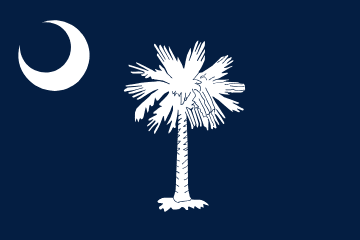
South Carolina
No commercial casinos on South Carolina soil, no tribal casinos operating inside the state, no state-licensed online casino and no gaming commission for commercial gambling. The only broadly legal forms of gambling are the South Carolina Education Lottery, licensed charitable bingo and raffles, and casino cruises that sail past the state’s territorial waters before dealing a single hand.
The short answer for SC players
No. Online blackjack is not legal in South Carolina, and no online blackjack site is regulated or licensed in the United States for South Carolina play. The state has never authorized internet casino gaming, has no licensing framework for it, and has no regulator that could issue a license if one were requested. Every real money blackjack site accepting South Carolina residents today operates from outside the country under a foreign license.
South Carolina is one of the hardest states in the country to gamble in legally, and blackjack sits squarely on the wrong side of the line. Real money online blackjack is available to residents, but every site offering it is based overseas, licensed overseas and answerable to no authority in the United States. Nothing on this page is legal advice. It is a plain reading of South Carolina law, current legislation and the offshore market as of August 2026.
What “not regulated in the USA” actually means
In New Jersey, Pennsylvania, Michigan, Delaware, West Virginia, Connecticut and Rhode Island, online casinos are licensed by a state regulator. Those regulators audit game software, hold operator funds in segregated accounts, enforce payout rules and take player complaints. If a licensed New Jersey casino refuses to pay a blackjack win, the player can file a complaint with the Division of Gaming Enforcement and a state agency will investigate.
South Carolina has none of that. There is no agency to complain to, no bond backing player balances and no state authority with jurisdiction over a company incorporated in Curacao, Panama or Costa Rica. The South Carolina Department of Consumer Affairs handles consumer complaints generally, but it has no gambling enforcement power over foreign operators. The South Carolina Education Lottery regulates the lottery and nothing else.
Why offshore sites are the main real money option in South Carolina
Because South Carolina prohibits casino gaming rather than licensing it, the market did not disappear. It moved offshore. Sites operating from foreign jurisdictions have accepted South Carolina customers for two decades because federal law is aimed primarily at operators and payment processors rather than at individual players, and because South Carolina has never brought an enforcement action against a resident for playing online.
Practically speaking, a South Carolina adult who wants to play real money blackjack from home has three options: an offshore casino, a sweepstakes site that offers blackjack for redeemable virtual currency, or a drive to the Big “M” casino cruise in Little River or a tribal casino in North Carolina. Each of those is covered in detail below.
The risks you take on
The honest version, without the sales pitch.
Nobody backs your balance
No state or federal regulator backs your account balance. If an operator stops paying, there is no realistic recovery path.
Payout delays and caps
Payout delays and limits are common. Many offshore sites cap weekly withdrawals and reserve the right to extend review periods.
Bonus terms bite blackjack hardest
Bonus terms are aggressive, and blackjack is usually the most restricted game in them.
Card deposits get declined
Card deposits are frequently declined by U.S. banks under the Unlawful Internet Gambling Enforcement Act of 2006.
Disputes go nowhere useful
Dispute resolution runs through the operator’s own support team or, at best, a foreign licensing body with limited power.
Operators can leave
Account closure, term changes or an outright exit from the U.S. market can happen with little notice.
Your legal position is untested
Playing card games for money in the wrong setting is a misdemeanor under South Carolina law, and the state’s online position has never been tested in court.
South Carolina blackjack at a glance
| Category | Status in South Carolina |
|---|---|
| Regulated online casinos | None |
| Land-based casinos in state | None |
| Tribal casinos in state | None |
| Legal blackjack in state | Only aboard casino cruise vessels once in federal waters |
| Offshore sites accepting SC players | Yes, unlicensed and unregulated |
| Sweepstakes casinos | Available, not banned by statute as of August 2026 |
| Sports betting | Illegal |
| State lottery | Legal, 18 and older |
| Charitable bingo and raffles | Legal under license |
| Casino cruise age | 21 and older |
| Governing statute | Title 16, Chapter 19 of the South Carolina Code of Laws |
Start with the law before you start with a bonus
South Carolina has no regulator, so the reader has to do the checking that a state agency would normally do.
Offshore Blackjack Sites That Accept South Carolina Players
Ten sites take South Carolina registrations and all of them deal blackjack. None is licensed in the United States.

Bovada
Most used brand in SC
Launched in 2011 out of the Bodog lineage. Casino, sportsbook and poker room on a single wallet, which matters in a state where none of the three is legal locally. South Carolina is not on its restricted list.

Ignition Casino
Blackjack plus poker
Runs on the same underlying network as Bovada and launched in 2016. The poker room uses anonymous tables and a fast-fold format, so regulars cannot track recreational players across sessions.

Cafe Casino
Simplest mobile lobby
The casino-only sibling in the same family, live since 2016. No sportsbook and no poker room, so the casino lobby is the entire product and the interface is easier to navigate on a phone.

Slots.lv
Clearest loyalty program
Serving U.S. players since 2013. Built around slots, but the table section carries a legitimate blackjack spread including single deck, multi-hand and live dealer tables.
The sites below all accept registrations from South Carolina and all offer blackjack. None of them is licensed in the United States. They are listed with the specifics that matter to a blackjack player rather than a slots player: how many blackjack variants are on the software, whether there is a live dealer floor, how blackjack is treated in the bonus terms, and how the operator pays out.
How We Ranked These South Carolina Blackjack Sites
Rankings weigh six things, in this order.
Track record and payout history
Length of time serving U.S. players and reputation for paying without excuses.
Blackjack depth
Number of variants, rule quality, table limits and whether live dealer blackjack is offered.
South Carolina availability
Whether the operator’s restricted state list includes South Carolina. None of the sites below listed South Carolina as restricted at the time of writing.
Bonus honesty for blackjack players
Whether blackjack counts toward wagering requirements at all, and at what weighting.
Banking
Crypto and fiat options, withdrawal speed and weekly limits.
Mobile performance
Whether the blackjack tables run properly in a phone browser without an app download.
Verify before you deposit
Restricted state lists, bonus terms and payout limits change frequently at offshore operators. Verify current terms directly with the site before depositing.
The most widely used offshore blackjack brand in South Carolina
1. Bovada Blackjack for South Carolina Players
Bovada launched in 2011 out of the Bodog lineage and is the most widely used offshore brand in South Carolina. It is a three-in-one property, with casino, sportsbook and poker room on a single wallet, which matters in a state where none of the three is legal locally. As of 2026 its restricted state list covers Delaware, Maryland, Nevada, New Jersey and New York. South Carolina is not on that list.
The blackjack library is one of the better ones in the offshore market, with a spread of single deck, classic multi-hand, Perfect Pairs, Zappit and a live dealer floor running standard seven-seat tables. Table limits scale from low-stakes recreational levels up into the high hundreds on the live floor. Banking leans heavily on cryptocurrency, and crypto withdrawals are typically the fastest route. Voucher transfers between Bovada players are also supported.
Blackjack caveat: as with nearly every offshore casino, the headline welcome bonus is built for slots. Blackjack either does not count toward the rollover or counts at a heavily reduced rate. Read the promotion terms before opting in.
2. Ignition Casino Blackjack in South Carolina
Ignition runs on the same underlying network as Bovada and launched in 2016. For South Carolina players who want blackjack and poker in one account, it is the strongest option in this group. The poker room uses anonymous tables and a fast-fold format, which keeps regulars from tracking recreational players across sessions.
The blackjack selection mirrors the Bovada spread, including single deck and multi-hand variants plus a live dealer floor. Ignition tends to run casino promotions on a slightly different calendar than Bovada, so the two are worth comparing on any given week. Crypto is the primary banking rail here as well.
3. Cafe Casino Blackjack for SC Residents
Cafe Casino is the casino-only sibling in the same family, live since 2016. Because it does not carry a sportsbook or poker room, the casino lobby is the entire product, and the interface is noticeably simpler to navigate on a phone.
Blackjack coverage includes single deck, classic, Perfect Pairs and Zappit variants alongside a live dealer floor. The site runs a tiered loyalty program that accrues on real money play, which is worth checking since some offshore loyalty schemes exclude table games from point accrual entirely.
4. Slots.lv Blackjack Options in South Carolina
Slots.lv has been serving U.S. players since 2013 and, as the name suggests, is built around its slot library. That said, the table game section carries a legitimate blackjack spread including single deck and multi-hand options, plus live dealer tables.
Its loyalty program is one of the more transparent in the offshore market, and the site tends to run frequent reload offers. The tradeoff for blackjack players is the same as everywhere in this group: the promotions are slot-weighted, and blackjack contributes little or nothing to clearing them.

5. Wild Casino Blackjack for South Carolina Players
Wild Casino launched in 2017 and has grown into one of the deepest live dealer operations available to U.S. players. It carries tables from more than one live studio provider, which means South Carolina players get a wider range of blackjack rule sets, seat counts and betting limits than most competitors offer.
The virtual blackjack section is also substantial, running well beyond the standard three or four variants. Banking supports a broad crypto menu plus traditional options. Wild Casino is generally the first stop for an SC player whose main interest is live dealer blackjack specifically.

6. BetOnline Casino and Blackjack in South Carolina
BetOnline dates to 2001 and is licensed in Panama, making it one of the longest continuously operating U.S.-facing brands. It is best known as a sportsbook, but the casino carries blackjack across both virtual and live dealer formats, and the site also runs a poker room.
Its longevity is the main argument in its favor. A site that has processed U.S. payouts through two decades of shifting federal enforcement has a track record that newer brands do not. Bonus rollover requirements at BetOnline are often lower than the offshore average, though blackjack contribution is still restricted.

7. Super Slots Blackjack in South Carolina
Super Slots launched in 2020 and shares operational infrastructure with Wild Casino. Its distinguishing feature is a dedicated premium live dealer section running alongside the standard live floor, which gives blackjack players a second set of tables with different limits and rule variations.
Crypto banking is the emphasis here, and crypto-specific bonuses are usually the strongest on offer. The virtual blackjack lineup is solid without being exceptional; the live floor is the reason to open an account.

8. MyBookie Casino Blackjack for SC Players
MyBookie launched in 2014 and, like BetOnline, is a sportsbook-first operation with a casino attached. For a South Carolina player who wants to bet on Clemson or the Gamecocks and also play blackjack from the same balance, it is a reasonable single-account solution.
The blackjack offering covers the standard virtual variants plus live dealer tables. Promotions here are marketed aggressively, so the fine print deserves more scrutiny than usual, particularly around maximum bet limits while a bonus is active.

9. Casino Max Blackjack in South Carolina
Casino Max runs on Real Time Gaming software, a different engine from the four Bodog-family sites above. That changes the blackjack experience: RTG blackjack variants have their own rule sets and interface, and the platform does not offer a live dealer floor in the way Wild Casino or Super Slots do.
The site is known for large percentage-based welcome offers. South Carolina blackjack players should treat those numbers with real skepticism. RTG bonus terms typically exclude blackjack from bonus play outright or impose a much higher rollover on table games. Verify before opting in, because opting in to the wrong bonus can lock your entire balance behind a slots-only wagering requirement.

10. Roaring 21 Blackjack for South Carolina Residents
Roaring 21 is another RTG property, live since 2019, with a 1920s theme and a similar profile to Casino Max. The blackjack selection is limited compared with the Bodog-family sites, and there is no meaningful live dealer floor.
It earns a spot on this list mainly for its promotional cadence and its acceptance of South Carolina players, not for blackjack depth. The same bonus warning applies: check whether blackjack contributes to wagering before depositing against an offer.





Offshore Blackjack Site Comparison for South Carolina
| Site | Launched | Software Family | Live Dealer Blackjack | Sportsbook | Poker | Accepts SC |
|---|---|---|---|---|---|---|
| Bovada | 2011 | Bodog network | Yes | Yes | Yes | Yes |
| Ignition | 2016 | Bodog network | Yes | No | Yes | Yes |
| Cafe Casino | 2016 | Bodog network | Yes | No | No | Yes |
| Slots.lv | 2013 | Bodog network | Yes | No | No | Yes |
| Wild Casino | 2017 | Multi-provider | Yes, multiple studios | No | No | Yes |
| BetOnline | 2001 | Multi-provider | Yes | Yes | Yes | Yes |
| Super Slots | 2020 | Multi-provider | Yes, multiple studios | No | No | Yes |
| MyBookie | 2014 | Multi-provider | Yes | Yes | No | Yes |
| Casino Max | 2017 | Real Time Gaming | Limited | No | No | Yes |
| Roaring 21 | 2019 | Real Time Gaming | Limited | No | No | Yes |
Check the operator before the bonus
Nobody in South Carolina audits these sites, so run the checks a regulator would run in a licensed state.
Are Offshore Blackjack Sites Legal in South Carolina?
They are not approved, audited, bonded or supervised by any South Carolina agency, and no license exists for them to hold.
Not licensed, not regulated, not approved by the state
No. Offshore blackjack sites are not legal in South Carolina in any meaningful sense. They hold no South Carolina license because none exists. They are not approved, audited, bonded or supervised by any South Carolina agency. Their operations would violate South Carolina’s gambling statutes if conducted from inside the state, and offering casino games to South Carolina residents from abroad is not something state law contemplates or blesses.
Sites that describe themselves as “legal in South Carolina” because they hold a Curacao or Panama license are relying on a sleight of hand. A Curacao license authorizes the operator under Curacao law. It says nothing about South Carolina.
Why offshore sites still accept South Carolina players
Three things explain the gap between the law and the reality.
Jurisdiction
A company incorporated and hosted outside the United States is difficult for a state attorney general to reach. South Carolina can prosecute a person operating a gambling house in Florence. It has no practical mechanism to shut down a server in Costa Rica.
Federal law targets operators and money flows
The Unlawful Internet Gambling Enforcement Act of 2006 prohibits businesses from knowingly accepting payments connected to unlawful internet gambling. It regulates the financial side of the transaction. It does not make it a federal crime for an individual to place a bet.
No South Carolina enforcement history
The state has never, to any public record, charged an individual resident for playing casino games online. Enforcement resources in South Carolina have historically gone to physical operations: video poker rooms, unlicensed machine parlors, and in one notable instance a home poker game.
Has South Carolina ever prosecuted an online blackjack player?
There is no public record of it. But the state has shown a willingness to prosecute card play that other states would ignore. In April 2006, Mount Pleasant police raided a weekly home poker game and arrested roughly 20 players under Section 16-19-40. Most took plea deals and paid fines. Five fought the charges, and in 2012 the South Carolina Supreme Court upheld the statute and reinstated their convictions in Town of Mount Pleasant v. Chimento. That case involved a private residence and a game with no house rake. If South Carolina courts are willing to apply an 1802 statute to a friendly home poker game, an assumption that online play is definitively outside the statute’s reach is an assumption, not a settled question. The statute has simply never been tested against internet play.
The real risks in plain language
| Risk | What it means for a South Carolina player |
|---|---|
| You have no recourse if you are not paid | This is the single largest risk and it is not theoretical. Offshore operators have exited markets, frozen balances and voided winnings. When it happens, there is no South Carolina agency, no U.S. court with easy jurisdiction and no insurance fund. |
| Payment friction is constant | U.S. banks decline card transactions flagged as gambling-related. Deposits fail, and players who work around declines by miscoding transactions create their own problems. |
| Bonus terms can trap a balance | Accepting a slots-weighted bonus and then playing blackjack is the most common way offshore players lose access to their own money. Blackjack often contributes zero percent toward wagering requirements, meaning the requirement never clears. |
| Games are not independently verified for SC players | Some offshore operators publish third-party testing certificates. Many do not. There is no state audit. |
| Your legal position is untested | Section 16-19-40 carries up to 30 days or a fine of up to $100 for a player. That is a small penalty, but it is a criminal one, and the reach of the statute online has never been litigated. |
How South Carolina players can lower their risk
- Prefer operators with a decade or more of continuous U.S. payout history over new brands with large bonuses.
- Withdraw regularly instead of maintaining a large balance on the site.
- Decline the welcome bonus if you intend to play blackjack. An unbonused balance is a withdrawable balance.
- Read the withdrawal section of the terms before the first deposit, specifically weekly limits and fees.
- Complete identity verification early rather than at the moment of your first cashout request.
- Keep your own records of deposits, sessions and withdrawals.
- Use one funding method consistently. Mixed funding rails are a common trigger for payout delays.
- Set a loss limit before you sit down and treat it as fixed.
If a payout goes wrong, know the sequence
South Carolina agencies have no jurisdiction over a Curacao operator, so the escalation path is yours to run.
Why Online Blackjack Is Not Legal in South Carolina
Most states ban gambling by statute. South Carolina wrote the prohibition into its constitution, which changes everything about how it could be undone.
The South Carolina Constitution and Article XVII
Most states ban gambling by statute, which means a simple majority in the legislature can undo it. South Carolina wrote the prohibition into its constitution. Article XVII, Section 7 of the South Carolina Constitution bars lotteries and gambling devices, with a carve-out added by voter referendum in 2000 for the state education lottery.
This is the structural obstacle that makes South Carolina different from, say, Georgia or Texas. In many states a casino bill needs a legislature and a governor. In South Carolina, most meaningful expansion is widely understood to require a constitutional amendment, which means two-thirds approval in both the House and the Senate, then a statewide referendum, then ratification by the General Assembly. Blackjack cannot be legalized by a single vote in Columbia.
Title 16, Chapter 19 of the South Carolina Code
The criminal prohibitions live in Title 16, Chapter 19, titled Gambling and Lotteries. It is worth reading because the language is genuinely archaic and because it is still enforced.
Section 16-19-40: the 1802 card and dice statute
Section 16-19-40 is the provision that most directly reaches blackjack. Enacted in 1802 and amended as recently as 1999, it makes it unlawful to play “any game with cards or dice” at a tavern, inn, liquor store, “any house used as a place of gaming,” a barn, kitchen, stable, outhouse, street, highway, open wood, race field or open place. It specifically exempts billiards, bowls, backgammon, chess, draughts and whist, and only when there is no betting on them.
Blackjack is a game with cards. The statute does not name it, but it does not need to.
Penalties are split. A player convicted before a magistrate faces up to 30 days imprisonment or a fine of up to $100. A person keeping the place used for gaming faces up to 12 months and forfeiture of up to $2,000 per offense. The gap between those two numbers is the clearest signal in South Carolina law that the state’s focus is operators, not customers.
Section 16-19-50: keeping unlawful gaming tables
Section 16-19-50 targets anyone who sets up, keeps or uses a gaming table or bank “of the like kind or of any other kind for the purpose of gaming.” Conviction carries a forfeiture of not less than $200 and not more than $500. A 2022 amendment, Act No. 190, added an exemption allowing gaming device manufacturers in good standing with the Secretary of State to develop, manufacture and ship equipment for use in out-of-state jurisdictions. That amendment is worth noting because it shows the legislature is willing to carve out gambling-adjacent commerce when jobs are involved, while leaving the play itself prohibited.
Section 16-19-130: betting, pool selling and bookmaking
Section 16-19-130 is the broadest provision in the chapter. It prohibits bookmaking, pool selling, keeping a room or building with apparatus for recording bets, and receiving or forwarding money wagered “upon any lot, chance, casualty, unknown or contingent event whatsoever.” It also reaches anyone who “aids, assists or abets” those acts. Penalties run to a fine of up to $1,000, up to six months imprisonment, or both. Section 16-19-140 declares a violation a common nuisance.
The phrase “unknown or contingent event whatsoever” is expansive enough that South Carolina prosecutors would have a straightforward argument for applying it to an operator taking casino wagers, even without a statute that mentions the internet.
Section 16-19-10: lotteries and the $1,000 fine
Section 16-19-10 makes it a misdemeanor to set up any scheme “in the nature of a lottery, by way of chances, either by dice, lots, cards, balls, numbers, figures, or tickets.” Conviction carries a $1,000 fine and one year imprisonment, and each violation is a separate offense. One-third of the fine goes to whoever informed law enforcement. That informant bounty, written into the code, is a small window into how seriously the state historically treated gambling.
Section 16-19-60: the narrow social gaming exception
In 2014, the General Assembly passed Act No. 194, adding Section 16-19-60. It permits members of a club or social organization to gather and play games of tiles, cards or dice, including canasta, mahjong and bridge, in a private residence, home or community clubhouse.
The 2014 law legalized bridge night, not a home blackjack game
The exception applies only if no electronic or mechanical devices are used, no person or entity receives any direct or indirect financial benefit, the host receives nothing, a bona fide social relationship exists among participants, and, critically, “there is no betting, wagering, or gambling of any kind.” It did not legalize a home blackjack game for money, and it has no application to online play whatsoever.
Section 16-19-70: the Sabbath provision
Section 16-19-70 fines anyone $50 for keeping a gaming table or permitting games to be played in a house on the Sabbath. It is effectively unenforced and rarely surfaces, but it remains on the books and illustrates the age of the chapter.
Section 16-19-80: forfeiture of wagers
Section 16-19-80 declares all money staked or bet on a prohibited game forfeited. There is no analogous provision for recovering money lost to an unlicensed operator, which is the practical asymmetry South Carolina players live with.
The video poker hangover still shapes every vote
Understanding why South Carolina will not legalize online blackjack requires understanding what happened in the 1990s.
Through that decade, video poker machines proliferated across South Carolina in convenience stores, gas stations, restaurants and standalone parlors. At the peak, the state had one of the highest concentrations of gambling machines per capita in the country, generating hundreds of millions of dollars in an environment with minimal regulation, minimal age enforcement and no meaningful cap on losses. The industry became a dominant force in state politics and campaign financing.
The backlash was severe. After years of litigation and a failed attempt to put the question to voters, the South Carolina Supreme Court ruled that the proposed referendum was unconstitutional and the machines were ordered dark by June 30, 2000. Tens of thousands of machines were removed and destroyed.
That episode permanently fused “gambling” and “video poker” in the minds of a generation of South Carolina legislators and voters. Every casino, sports betting or online gaming bill introduced since has run into that memory before it reaches a floor vote. It is the single most important piece of context for anyone trying to forecast South Carolina online blackjack legalization.
No regulator, no licensing path
Even setting aside the constitutional question, South Carolina has no institutional machinery for casino regulation. There is no gaming commission. There is no licensing division. There is no responsible gambling program funded by gaming taxes, no statewide self-exclusion list and no dispute process. Both the 2025 and 2026 gambling bills had to propose creating a commission from scratch, which is one reason industry analysts estimate 12 to 18 months between any enactment and a first legal wager.
South Carolina Gambling Laws and What Is Actually Legal
The legal column is short, the illegal column is long, and blackjack appears only in the second one.
Legal in South Carolina
- South Carolina Education Lottery. Approved by voters in 2000, first tickets sold in 2002. Draw games, instant tickets and multi-state games including Powerball and Mega Millions. Minimum age 18. Proceeds fund education.
- Charitable bingo. Legal under license, tracing back to the Bingo Act of 1976, and restricted to qualifying nonprofit organizations.
- Charitable raffles. Authorized by constitutional amendment approved by voters in 2014, and limited to nonprofits under licensing rules.
- Casino cruises. Permitted under Title 3, Chapter 11 of the code, with gambling allowed only outside South Carolina’s territorial waters.
- Certain social games. Permitted under Section 16-19-60 only where no wagering occurs.
Illegal in South Carolina
- Commercial casinos on land
- Online casino gaming, including blackjack
- Online and retail sports betting
- Online poker and commercial card rooms
- Video poker and slot machines
- Pari-mutuel wagering on horse racing
- Home card games played for money
- Bookmaking and pool selling
The South Carolina Gambling Cruise Act
Title 3, Chapter 11 of the South Carolina Code governs gambling vessels. The current framework, largely shaped by 2005 Act No. 104 effective June 1, 2005, permits gambling on vessels but not while they are within the state’s territorial waters, and allows counties and municipalities to prohibit or regulate gambling vessels within their jurisdictions.
This is the legal mechanism that produces the only real blackjack tables physically connected to South Carolina. A vessel boards passengers at a South Carolina dock, sails past the state’s jurisdictional boundary and opens the casino floor only once it is in federal waters.
Penalties for South Carolina players versus operators
| Statute | Conduct | Maximum Penalty |
|---|---|---|
| 16-19-40 (player) | Playing a game with cards or dice in a prohibited place | 30 days or $100 fine |
| 16-19-40 (keeper) | Keeping a house used as a place of gaming | 12 months and up to $2,000 per offense |
| 16-19-50 | Setting up or keeping a gaming table | $200 to $500 forfeiture |
| 16-19-70 | Permitting games on the Sabbath | $50 fine |
| 16-19-90 | Betting on an election | $500 fine and one month |
| 16-19-130 | Bookmaking, pool selling, recording bets | $1,000 fine, six months, or both |
| 16-19-10 | Setting up a lottery | $1,000 fine and one year, per offense |
What South Carolina law does not say about the internet
Nothing in Title 16, Chapter 19 mentions computers, the internet, mobile applications or interactive wagering. The chapter predates all of it. South Carolina has never passed an internet gambling statute, has never defined online casino play as a distinct offense and has never carved out an exemption for it either. That silence is why offshore sites operate here and why the phrase “gray area” gets used so often. It is more accurate to say the question is unaddressed rather than permitted. A prosecutor arguing that an internet blackjack table is a “gaming table or bank of the like kind” under Section 16-19-50, or that an operator recording wagers violates Section 16-19-130, would not be making an unreasonable argument. It simply has not been tried.
Federal law sits on top of the state code
The Wire Act and the UIGEA shape what offshore operators and their banks can do for South Carolina players.
South Carolina Gambling Bills and Legislation Timeline
From an 1802 card statute to a 2026 committee hearing that still ended without a floor vote.
1802 to 1976: the foundation
- 1762: Earliest ancestor of the modern anti-lottery statute now codified at Section 16-19-10.
- 1790: Sabbath gaming prohibition enacted, now Section 16-19-70.
- 1802: The card and dice statute is enacted. It survives, amended, as Section 16-19-40 and remains the provision most directly applicable to blackjack.
- 1895: The South Carolina Constitution is ratified with Article XVII prohibiting lotteries.
- 1912: Bookmaking and pool selling prohibition enacted, now Section 16-19-130.
- 1976: The Bingo Act authorizes charitable bingo, the state’s first meaningful gambling carve-out.
1993: the Catawba settlement
Congress passes the Catawba Indian Tribe of South Carolina Land Claims Settlement Act, resolving a long-running land claim. The tribe gains federal recognition and land, and in exchange accepts that its gaming rights inside South Carolina are governed by the settlement and state law rather than by the Indian Gaming Regulatory Act. The practical effect is that the Catawba are limited to bingo halls in South Carolina.
1990s: the video poker boom
Video poker machines spread across South Carolina under a loosely regulated licensing regime tied to Section 12-21-2720. The industry becomes one of the largest gambling markets in the Southeast and a major political force.
1999 and 2000: the ban and the lottery
- 1999: Act No. 125 amends Sections 16-19-40 and 16-19-50 to explicitly cover licensed machines used for gambling purposes. The legislature sets up a referendum on video poker’s future.
- 1999: The South Carolina Supreme Court rules the proposed video poker referendum unconstitutional.
- June 30, 2000: Video poker machines must be shut down statewide. Tens of thousands are removed.
- November 2000: Voters approve a constitutional amendment authorizing a state lottery, with roughly 54 percent in favor.
2002 to 2007: lottery launch and the Catawba court fight
- 2002: First South Carolina Education Lottery tickets sold.
- 2005: Act No. 104 restructures the Gambling Cruise Act, effective June 1, 2005, and gives local governments authority over gambling vessels.
- March 2007: The South Carolina Supreme Court rules the Catawba cannot operate video poker machines on their reservation, holding that the statewide ban applies to the tribe. The U.S. Supreme Court declines to hear the appeal, ending the tribe’s leverage to build a high-stakes electronic bingo facility.
2006 to 2012: the poker arrests and Chimento
- April 2006: Mount Pleasant police raid a home poker game and arrest roughly 20 players under Section 16-19-40. Most plead out. Five contest the charges.
- 2009 to 2012: The case moves through the courts. In 2012 the South Carolina Supreme Court upholds the statute and reinstates the convictions in Town of Mount Pleasant v. Chimento, confirming the 1802 law is enforceable against modern card play.
2013 to 2017: raffles and the Catawba move north
- 2013 and 2014: Voters approve a constitutional amendment permitting charitable raffles, and implementing legislation follows.
- June 2014: Act No. 194 adds Section 16-19-60, the narrow social gaming exception that still forbids wagering.
- May 2017: The Catawba close their Rock Hill high-stakes bingo operation after years of declining profitability.
2018 to 2024: sports betting attempts and the Two Kings fight
- 2018: The U.S. Supreme Court strikes down PASPA, opening the door for states to legalize sports betting. South Carolina does not move.
- 2018 to 2020: The U.S. Department of the Interior takes 16 acres in Kings Mountain, N.C., into trust for the Catawba. The Eastern Band of Cherokee Indians sues to block it. Sen. Lindsey Graham introduces S. 790 in 2019 to authorize the parcel; it does not advance.
- July 1, 2021: The Catawba open a temporary casino at Kings Mountain.
- December 2021: Congressional action effectively closes the Cherokee’s primary legal avenue against the project.
- 2022: The National Indian Gaming Commission determines the development contract between the tribe and Sky Boat Gaming violates the Indian Gaming Regulatory Act, halting permanent construction. Act No. 190 amends Section 16-19-50 to exempt in-state manufacture of gaming equipment for out-of-state markets.
- 2022 to 2024: Multiple South Carolina sports betting bills are introduced. None reaches a floor vote in either chamber.
- May 2024: The Catawba settle with Sky Boat, clearing the path for the permanent resort. Construction begins June 7, 2024.
2025: the bills are filed
- Jan. 14, 2025: Reps. Rutherford and Grant introduce H. 3353, a joint resolution proposing an amendment to Article XVII that would let the General Assembly authorize pari-mutuel horse race betting, sports betting on professional sports, casino card and dice games and electronic gaming devices in specified areas of the state. Referred to House Judiciary.
- 2025: H. 3625, the House sports wagering vehicle, is introduced and gathers additional sponsors without reaching a vote.
- March 12, 2025: S. 444, the South Carolina Sports Wagering Act, is introduced by Sens. Tom Davis and Matthew Leber. It would create a nine-member South Carolina Sports Wagering Commission with venue in Richland County, authorize interactive sports wagering, cap licenses at eight, set a 12.5 percent tax on adjusted gross receipts, and add Section 16-19-135 to exempt bettors from existing criminal provisions.
- 2025: S. 362 is introduced, proposing Section 16-19-5 to declare that paying a fee to play a game in which skill predominates over chance, with a prize proportionate to skill, is not gambling. This is the skill-game vehicle.
- March 2025: H. 4176, the I-95 Economic and Education Stimulus Act, is introduced. It would add Chapter 36 to Title 1, establish a South Carolina Gaming Commission and authorize land-based casino gaming in economically distressed counties along Interstate 95, with a proposed site in Santee.
- April 22, 2025: A South Carolina Senate hearing addresses online gambling legalization, including the sweepstakes casino model. No legislation results.
2026: the furthest a bill has ever gotten, and it still died
- January 2026: H. 4176 is placed on the House calendar. An amendment is floated directing 35 percent of casino privilege tax revenue to the South Carolina Conservation Bank and 30 percent to the Veterans’ Trust Fund, an attempt to convert opponents.
- Late January 2026: The House hears H. 4176 and refers it back to the Ways and Means Committee rather than taking a floor vote.
- Feb. 3, 2026: The casino bill is widely reported as dead for the session after failing to reach the House floor.
- Feb. 18, 2026: The Senate Labor, Commerce and Industry Committee holds a public hearing on S. 444. It is the first sports betting hearing scheduled anywhere in the country in 2026 and the furthest any South Carolina sports wagering bill has advanced. No vote is taken.
- Spring 2026: S. 444 does not advance to a floor vote. Gov. Henry McMaster’s stated opposition to gambling expansion remains a decisive obstacle.
- May 14, 2026: Under S. 883, both chambers recess subject to the call of the President of the Senate and the Speaker of the House, with final sine die adjournment set for no later than Nov. 8, 2026. No gambling expansion legislation passed.
What passed and what failed
| Measure | Year | Subject | Outcome |
|---|---|---|---|
| Bingo Act | 1976 | Charitable bingo | Passed |
| Video poker referendum | 1999 | Machine gambling | Struck down by state Supreme Court |
| Lottery amendment | 2000 | State lottery | Approved by voters, roughly 54 percent |
| Act No. 104 | 2005 | Gambling cruises | Passed |
| Raffle amendment | 2013 and 2014 | Charitable raffles | Approved |
| Act No. 194 | 2014 | Social gaming exception | Passed, no wagering permitted |
| Act No. 190 | 2022 | Gaming device manufacturing | Passed |
| H. 3353 | 2025 and 2026 | Constitutional amendment | Died in committee |
| S. 362 | 2025 and 2026 | Skill games | Died in committee |
| H. 3625 | 2025 and 2026 | Sports betting | Died in committee |
| S. 444 | 2025 and 2026 | Sports betting | Hearing held, no vote, died |
| H. 4176 | 2025 and 2026 | I-95 casinos | Referred back to committee, died |
Why South Carolina gambling bills keep dying
Five reasons recur.
The constitutional hurdle
Legislators know a statute alone may not survive a court challenge, so they run parallel constitutional and statutory tracks. That doubles the work and splits the coalition.
Executive opposition
A governor opposed to expansion makes passage pointless without veto-proof margins.
The video poker memory
The 2000 shutdown is a live political fact, not history, for many members.
Religious and social conservative opposition
A durable bloc in both chambers votes against expansion on principle regardless of revenue projections.
Modest revenue
Supporters estimate legal sports betting would produce roughly $40 million to $80 million in annual gross gaming revenue and $5 million to $10 million in tax revenue at the proposed 12.5 percent rate. That is not a number large enough to overcome the other four obstacles.
Tribal Gaming in South Carolina and the Catawba Nation
The only federally recognized tribe in the state gave up its IGRA gaming rights in 1993, and ended up building its casino in North Carolina.
The 1993 Catawba Land Claims Settlement Act
The Catawba Indian Nation is headquartered near Rock Hill and is the only federally recognized tribe in South Carolina. Its situation is unlike almost any other tribe in the country, and the reason is a single piece of federal legislation.
The Indian Gaming Regulatory Act passed in 1988. The Catawba were not federally recognized at the time and were therefore not covered by it. Recognition came five years later through the Catawba Indian Tribe of South Carolina Land Claims Settlement Act of 1993, which resolved a bitter dispute over thousands of developed acres in York County. In exchange for federal recognition, more than 4,000 acres and a monetary settlement, the tribe accepted terms under which its gaming in South Carolina would be governed by the settlement and state law rather than IGRA.
The result: the Catawba got the right to operate two bingo halls in South Carolina, one on tribal land and one off-reservation subject to local approval. They did not get the right to run casino table games, and they did not get the IGRA compact process that other tribes use to negotiate blackjack, roulette and slots with a state.
The Rock Hill bingo halls and why they closed
The tribe opened a high-stakes bingo parlor in Rock Hill in 1997 in the former Rock Hill Mall on Cherry Road. It was profitable for a few years. The tribe also pursued a second location near Myrtle Beach, which drew fierce local opposition and never materialized. The Rock Hill operation closed May 9, 2017.
The 2007 South Carolina Supreme Court video poker ruling
The Catawba fought for years to expand into electronic gaming. In March 2007 the South Carolina Supreme Court ruled that the tribe could not operate video poker machines on its reservation, holding that the statewide ban applied to the tribe as well. The U.S. Supreme Court declined to hear the appeal. With that, the tribe’s negotiating leverage inside South Carolina effectively disappeared.
How the Catawba ended up with a casino in North Carolina
Blocked in their own state, the Catawba turned north. The tribe claimed 17 acres near Kings Mountain, N.C., about 35 miles west of Charlotte and roughly five miles up Interstate 85 from the South Carolina line, as ancestral land.
The Interior Department initially rejected the trust application, citing the 1993 settlement. It reversed that decision in 2020 and took the land into trust, authorizing gaming. The Eastern Band of Cherokee Indians sued, arguing the site fell within Cherokee aboriginal territory and that the 1993 settlement barred the move. Congressional action in December 2021 effectively closed that avenue.
A temporary casino opened at Kings Mountain on July 1, 2021. Construction on the permanent resort stalled in 2022 when the National Indian Gaming Commission found the development agreement with Sky Boat Gaming gave a non-tribal company management authority in violation of IGRA. The tribe settled with Sky Boat in May 2024 and broke ground on June 7, 2024.
Catawba Two Kings Casino and blackjack tables
The Introductory Casino, the first permanent phase of the project, opened May 20, 2026, replacing the modular temporary facility that had operated since 2021. It occupies the ground floor of a six-story casino and parking structure and carries roughly 1,300 slot machines, about 22 live table games including blackjack, video poker bar tops, sports betting kiosks, a bar and a fast-casual restaurant.
The full Catawba Two Kings Casino Resort is targeted for spring 2027. At buildout it is planned to include a main gaming floor of roughly 3,000 to 4,300 slots, more than 100 live table games, 11 dining outlets, 11 bars and a 24-story, 385-room hotel, with total employment projected above 2,000.
For South Carolina blackjack players in the Upstate, this is the closest real casino blackjack. It is in North Carolina, not South Carolina.
Why tribal blackjack is not coming to South Carolina soil
Three obstacles stand in the way. The 1993 settlement subordinates Catawba gaming in South Carolina to state law. State law prohibits casino gaming. And the 2007 state Supreme Court ruling confirmed that the tribe does not get an exemption from the statewide prohibition.
That said, the situation is not frozen. The Catawba have pushed for South Carolina legislation granting them exclusive rights to future casino development in the state and have signaled a willingness to litigate. Any serious South Carolina casino bill will have to reckon with a tribe that believes it has a prior claim, which adds another complication to an already difficult legislative path.
How tribal gaming law works elsewhere
The Catawba are the exception. Most tribes negotiate blackjack under a compact process South Carolina never had.
When Will Online Blackjack Become Legal in South Carolina?
No bill authorizing online casino gaming has ever been introduced here. Not filed and defeated. Never introduced.
The constitutional amendment problem
This is the first and largest obstacle, and it is the one most often glossed over. Amending Article XVII requires two-thirds approval in both chambers of the General Assembly, then approval by a majority of voters in a statewide referendum, then ratification by the General Assembly. That process cannot be completed in a single session, and referendum questions appear on general election ballots, which means the calendar is measured in even-numbered years.
H. 3353, the amendment resolution filed in January 2025, died in House Judiciary without a vote. No amendment resolution has ever cleared both chambers.
The political landscape heading into 2027
Gov. Henry McMaster has consistently opposed gambling expansion, including sports betting, and his stated willingness to veto has functioned as a ceiling on how far bills bother to travel. He is term-limited and cannot run again in November 2026.
That makes the 2026 gubernatorial race the most significant near-term variable for South Carolina gambling policy. A successor who is neutral or supportive would remove one obstacle. It would not remove the constitutional hurdle, the video poker memory or the social conservative bloc in the legislature.
Pressure from North Carolina and neighboring states
North Carolina launched legal mobile sports betting in March 2024 and collected more than $100 million in tax revenue in its first year. The Catawba Two Kings project is drawing Upstate South Carolina dollars across the state line, and its permanent phase is scheduled to open in 2027. Georgia, Tennessee, Virginia and North Carolina all offer legal wagering options that South Carolina residents can reach by car or by crossing a border on a phone’s geolocation.
Revenue leakage arguments have moved other conservative states. They have not yet moved South Carolina, in part because the projected numbers are modest relative to the political cost.
The likely order of operations
Based on how every other U.S. state has sequenced expansion, South Carolina would almost certainly go in this order.
Sports betting
Retail or online, as the least controversial and most publicly popular product.
Land-based casinos
Likely tied to a specific economic development site such as the I-95 corridor proposal.
Online casino gaming, including blackjack
Only after a regulator exists and a land-based industry has established itself.
iGaming has been the last product legalized in essentially every state that has it, and only seven states have it at all. South Carolina is not going to become the eighth by skipping the first two steps.
A realistic timeline for South Carolina online blackjack
Being direct rather than optimistic.
| Window | What could realistically happen |
|---|---|
| 2027 to 2028 | The earliest plausible window for sports betting to pass, and only with a friendlier governor and a much stronger coalition than S. 444 assembled. Even then, a constitutional amendment path would add a referendum cycle. |
| 2029 to 2032 | The earliest realistic window for land-based casinos, assuming sports betting passes first and performs without scandal. |
| Beyond 2032 | The earliest honest window for regulated online casino gaming, including blackjack. |
Anyone promising South Carolina blackjack soon is selling something
As of August 2026, no bill authorizing online casino gaming has ever been introduced in South Carolina. Not filed and defeated. Never introduced.
What South Carolina players should watch for
- The November 2026 gubernatorial result and the winner’s stated position on gambling.
- Whether a constitutional amendment resolution gets a committee vote in the 2027 session.
- Whether S. 444 or a successor sports betting bill reaches a floor vote in either chamber.
- Whether the Catawba pursue litigation or legislation asserting exclusivity claims in South Carolina.
- Whether the 2027 opening of the full Two Kings resort changes the revenue leakage conversation in Columbia.
- Whether any sweepstakes restriction bill is filed, which would signal the legislature is paying attention to online gambling at all.
Sweepstakes Blackjack Sites for South Carolina Players
The only online casino-style option available to South Carolina players that does not require going offshore.
Are sweepstakes casinos legal in South Carolina?
As of August 2026, sweepstakes casinos are not banned in South Carolina. No state statute prohibits the model, no bill to restrict or ban it has been introduced, and the attorney general has issued no opinion declaring the format illegal gambling. South Carolina remains an open market while roughly a dozen other states have closed.
How the dual currency sweepstakes model works
Sweepstakes casinos avoid gambling classification by removing one of the three elements gambling law requires: consideration, chance and prize. Chance and prize are both present. Consideration is engineered out.
Players use two currencies. The first, usually called Gold Coins or something similar, has no cash value and is used for entertainment-only play. The second, usually called Sweeps Coins, can be redeemed for cash or gift cards once a minimum threshold is met. Gold Coin packages can be purchased, and Sweeps Coins arrive as a free bonus with those purchases. Crucially, Sweeps Coins can also be obtained free through an alternative method of entry, typically a mailed request or a daily login bonus.
Because no purchase is required to obtain the redeemable currency, operators argue the promotion is a sweepstakes rather than gambling. South Carolina’s gambling statutes target games requiring payment to play, which is the gap the model relies on.
The Prizes and Gifts Act and consumer protection oversight
The statute that actually applies to sweepstakes promotions in South Carolina is the Prizes and Gifts Act, enforced by the South Carolina Department of Consumer Affairs. It requires disclosure of prize values, odds and redemption conditions, and operators that fail to disclose odds or impose deceptive fees are subject to enforcement.
Note what this means. Sweepstakes casinos in South Carolina are overseen as consumer promotions, not as gambling. There is no gaming regulator auditing return-to-player percentages, no requirement to segregate player funds and no gaming-specific dispute process.
The 2025 Senate hearing and where things stand
The South Carolina Senate held a hearing on online gambling legalization on April 22, 2025, and the sweepstakes model was among the topics discussed. No bill emerged from that hearing, and none has been introduced since. The category has been noticed in Columbia without being acted on.
How much blackjack you actually get at sweepstakes sites
This is where South Carolina blackjack players should temper expectations. Sweepstakes platforms are overwhelmingly slot-driven. The economics of the model favor slots, and most operators’ libraries reflect that. Blackjack availability varies considerably from site to site, and where it exists it is usually a small number of virtual variants rather than a deep table game section.
Live dealer blackjack at sweepstakes sites has grown since 2024 but remains far less common and far less developed than at offshore casinos. A South Carolina player whose primary interest is blackjack specifically will find the offshore selection deeper. A player who wants a legally uncomplicated way to play casino games from home will find sweepstakes sites the cleaner option.
The national ban wave and the risk to South Carolina access
Sweepstakes casinos are legal in South Carolina today, but the national trend runs hard against the model. As of mid-2026, roughly 14 states have closed to sweepstakes operators. California, Connecticut, Indiana, Louisiana, Maine, Montana, Nevada, New Jersey, New York, Oklahoma and Tennessee have enacted explicit statutory bans since 2025. Idaho, Michigan and Washington enforce pre-existing gambling laws against the model.
Some of those laws are unusually broad. California’s AB 831, effective Jan. 1, 2026, criminalizes not just operators but the supporting supply chain, including payment processors, geolocation providers, content suppliers and media affiliates. Maine’s LD 2007 was signed April 6, 2026, treating Sweeps Coins as indirect consideration. Penalties in several states run into six figures per violation.
There is also active litigation. A class action naming a major sweepstakes operator has claimed to represent players in more than a dozen jurisdictions, including South Carolina, arguing the platforms function as illegal gambling. Several courts have shown sympathy for that theory.
Treat sweepstakes access as legal but watched
The practical takeaway for South Carolina players: do not build up a large unredeemed Sweeps Coin balance. Redeem regularly.
Sweepstakes versus offshore for South Carolina blackjack
| Factor | Sweepstakes Sites | Offshore Casinos |
|---|---|---|
| Legal status in SC | Not banned by statute | Not licensed or regulated |
| Blackjack depth | Limited | Deep, multiple variants |
| Live dealer blackjack | Growing but limited | Widely available |
| Direct cash wagering | No, virtual currency only | Yes |
| Table limits | Low | Low to high |
| Oversight | Consumer protection law only | Foreign licensing body only |
| Payment friction | Lower | Higher, card declines common |
| Main risk | State could ban the model | Nonpayment, no recourse |
Know which product you are actually signing up for
Sweeps, social and real money are three different legal animals, and only one of them pays cash directly.
Legal Ways to Play Blackjack In or Near South Carolina
One boat that sails past the state line, and two tribal floors across the border in North Carolina.
The Big “M” Casino cruise in Little River
The Big “M” Casino is the only real money casino gambling physically connected to South Carolina, and it exists entirely because the state’s jurisdiction stops at its coastline.
Two ships sail year-round from 4491 Mineola Ave. in Little River, just north of North Myrtle Beach. Passengers board at the dock, the vessel sails out past South Carolina’s territorial waters, and the casino floor opens only once the ship is in federal waters. Gaming runs roughly four hours on a cruise of about five and a half hours total, then the casino closes before the ship re-enters state waters.
The floor carries live blackjack alongside roulette, craps, three card poker, Let It Ride, slots and video poker. Key details for players:
- Minimum age: 21, no exceptions, with government-issued photo ID required at check-in.
- Boarding fee: typically around $20 per person, higher for Saturday evening sailings.
- Cash only on board. Card is accepted at the ticket office for the boarding fee, but all games take cash. There is an ATM on board.
- Security screening before boarding, with a casual dress code and no photography in the casino.
- Reservations recommended. Schedules vary by ship and season.
Verify current sailing times and pricing directly with the operator before driving out.
Catawba Two Kings Casino, Kings Mountain, North Carolina
The closest full casino floor to South Carolina’s Upstate. Located at Kings Mountain off Interstate 85 at Exit 5, roughly five miles north of the state line and 35 miles west of Charlotte. The Introductory Casino opened May 20, 2026, with roughly 1,300 slots and about 22 live table games including blackjack, plus sports betting kiosks. The full resort is scheduled for spring 2027.
Harrah’s Cherokee and Harrah’s Cherokee Valley River
The Eastern Band of Cherokee Indians operates two casinos in the North Carolina mountains, at Cherokee and at Murphy. Both offer full live table game floors including blackjack. They are a considerable drive from most of South Carolina, roughly three and a half to four hours from Greenville and longer from the Midlands or the Lowcountry, but they are the largest tribal gaming operations in the region.
Drive times from major South Carolina cities
| From | To Big “M”, Little River | To Two Kings, Kings Mountain |
|---|---|---|
| Myrtle Beach | About 30 minutes | About 4 hours |
| Florence | About 2 hours | About 2 hours 45 minutes |
| Columbia | About 3 hours | About 1 hour 45 minutes |
| Charleston | About 3 hours | About 4 hours |
| Rock Hill | About 4 hours | About 45 minutes |
| Greenville | About 5 hours | About 1 hour 15 minutes |
Drive times are approximate and do not account for traffic or seasonal beach congestion.
Free play and social blackjack apps
Purely free social casino apps, the kind with no redemption mechanism at all, are not gambling under any reading of South Carolina law and draw no scrutiny. They are a legitimate way to practice basic strategy without risk. They are also, obviously, not a way to win money.
Mobile Blackjack in South Carolina
No app store will carry a real money casino app for South Carolina, so everything runs in the browser.
Browser play versus app downloads
Offshore casinos serving South Carolina players almost universally run through the mobile browser rather than a native app. Apple and Google both restrict real money gambling apps to jurisdictions where the operator holds a license, which excludes South Carolina entirely. Any site telling South Carolina players to download an APK from outside an official app store deserves extra scrutiny.
In practice, browser play is fine. Modern offshore lobbies are built mobile-first, and blackjack tables render well on a phone. Save the site to your home screen for quick access.
What mobile blackjack looks like at offshore sites
Virtual blackjack works well on mobile. Live dealer blackjack is more demanding, since it is a video stream, and performance depends on connection quality. Playing live dealer over rural cellular data in parts of South Carolina can produce dropped hands, and a disconnection mid-hand is handled according to the operator’s terms, which are rarely in the player’s favor. Use Wi-Fi for live tables.
Geolocation and why it does not block South Carolina players
Regulated casinos in states like New Jersey use strict geolocation to confirm a player is physically inside state lines, because their license requires it. Offshore casinos have no such requirement and generally use only coarse IP-level checks to enforce their own restricted state lists. That is why South Carolina players can register without obstruction.
Do not use a VPN on an offshore site
South Carolina players should not use a VPN to disguise their location on an offshore site. It violates the terms of service at essentially every operator and gives them a clean justification for voiding winnings and closing the account.
Mobile play, without the traps
Fake apps and location workarounds are the two fastest ways to lose an offshore balance from a phone.
Live Dealer Blackjack for South Carolina Players
Two of the ten sites run tables from more than one studio, and that is what separates the live floors.
Which offshore sites have the best live tables
Among the sites accepting South Carolina players, Wild Casino and Super Slots carry the deepest live dealer blackjack offerings because they run tables from more than one live studio provider. The Bodog-family sites, Bovada, Ignition, Cafe Casino and Slots.lv, all carry live blackjack from a single studio with a more limited table count. The RTG-based sites offer little or nothing in this category.
Table limits and peak hours
Live dealer floors serving U.S. players run a limited number of physical tables, so seat availability tightens during peak hours, typically weekday evenings and weekend nights on Eastern time. South Carolina players looking for a specific limit range will have better luck in the afternoon or late night. Minimums on offshore live blackjack commonly start in the $5 to $10 range, with high-limit tables running considerably higher.
Live dealer versus RNG blackjack
| Factor | Live Dealer | Virtual (RNG) |
|---|---|---|
| Hands per hour | Roughly 40 to 60 | Several hundred if you play fast |
| Minimum bet | Higher | Lower |
| Rule variety | Fewer variants | Many variants |
| Deck penetration visible | Yes | No, continuous shuffle |
| Connection dependent | Yes | No |
| Bonus eligibility | Usually excluded | Usually excluded or heavily weighted |
Card counting does not work online
Virtual blackjack reshuffles after every hand. Live dealer tables serving U.S. players typically use continuous shuffling machines or shallow penetration specifically to defeat counting, and betting patterns are logged.
Judge a table before you sit down
Rules and payouts move the house edge further than any promotion an offshore site will offer a South Carolina player.
Blackjack Bonuses at Offshore Sites Accepting SC Players
The most important practical section on this page for a South Carolina player about to make a first deposit.
Why most welcome bonuses are bad for blackjack players
Offshore welcome bonuses are advertised with large percentages and large maximum amounts. Those numbers are built for slot players. Blackjack, because it has one of the lowest house edges in the casino when played with basic strategy, is the game operators least want cleared through. Typical treatment falls into one of three categories:
- Excluded entirely. Blackjack wagers contribute zero percent to the wagering requirement. Play blackjack with an active bonus and the requirement never moves.
- Heavily weighted down. Blackjack contributes 5 percent, 10 percent or 20 percent of the wagered amount toward the requirement, meaning you must wager five to 20 times more than a slot player to clear the same bonus.
- Prohibited outright. Some terms void the bonus and any winnings if blackjack is played while the bonus is active.
Game weighting and wagering requirements explained
Take a $1,000 bonus with a 25x rollover. A slot player must wager $25,000 to clear it. If blackjack is weighted at 10 percent, a blackjack player must wager $250,000 to clear the identical bonus. At a $25 average bet, that is 10,000 hands. This is not a bonus. It is a lock on your balance.
Crypto bonuses and reload offers
Most offshore sites serving South Carolina offer higher percentages for cryptocurrency deposits than for card deposits. The same weighting rules apply to blackjack. Reload bonuses and cashback offers are often better suited to table game players than the headline welcome offer, because cashback is typically paid on net losses regardless of which game produced them. Check whether table games are included in the cashback calculation.
Bonuses South Carolina blackjack players should skip
- Any offer with a rollover above 30x.
- Any offer where blackjack contributes under 20 percent.
- Any offer with a maximum bet cap you are likely to exceed, since exceeding it typically voids the bonus and any winnings from it.
- Any offer with a maximum cashout multiple, which caps what you can withdraw regardless of how much you win.
- Any offer you have not read in full. Offshore bonus terms are where balances go to die.
For most South Carolina blackjack players, the correct move is to decline the welcome bonus entirely. An unbonused deposit is a withdrawable deposit.
Read the terms before the offer reads you
Bonus terms are where South Carolina players most often lose access to money they already had.
Banking and Payouts for South Carolina Players
Crypto is the reliable rail, cards are the unreliable one, and every operator caps what leaves per week.
Deposit methods that work from South Carolina
- Cryptocurrency. Bitcoin, Litecoin, Ethereum, Bitcoin Cash and stablecoins. The most reliable rail at offshore sites and generally the fastest to withdraw.
- Credit and debit cards. Visa, Mastercard and sometimes American Express. Declines are common.
- Player-to-player vouchers. Offered by some sites as an internal transfer mechanism.
- Money transfer services. Available at some operators, usually with fees.
Why card deposits get declined in South Carolina
The Unlawful Internet Gambling Enforcement Act of 2006 requires financial institutions to identify and block transactions connected to unlawful internet gambling. Card networks assign a merchant category code to gambling transactions, and many U.S. issuers decline them automatically. This is not South Carolina specific, but it is the reason a first deposit attempt frequently fails.
Do not try to work around a decline by asking an operator to recode the transaction. That creates a problem larger than a failed deposit.
Crypto withdrawals and payout times
At most offshore sites serving South Carolina, crypto withdrawals clear fastest, often within 24 to 48 hours after approval. Check-by-courier can take one to three weeks. Bank wire sits in between and carries fees. Nearly every offshore operator imposes a weekly or monthly withdrawal cap, which matters enormously if you hit a large win. Find that number in the terms before you deposit, not after.
Identity verification
Offshore sites request identity documents before a first withdrawal, typically a government-issued photo ID, proof of address and proof of the payment method. Submitting documents early is the single most effective way to avoid a delayed first payout. Verification requested at the moment of a large cashout is where most payout complaints originate.
Safety and Security of Offshore Blackjack Sites
A Curacao or Panama license establishes corporate legitimacy abroad. It does not protect a South Carolina player.
What a Curacao or Panama license actually covers
Offshore operators serving South Carolina hold licenses from jurisdictions such as Curacao, Panama or Costa Rica. Those licenses establish corporate legitimacy in the issuing jurisdiction and impose some baseline requirements. They do not provide the protections a U.S. state license provides.
Specifically, a foreign license does not guarantee segregated player funds, does not typically involve routine game auditing by an independent U.S.-recognized lab, does not create a binding dispute process a South Carolina player can realistically use, and does not give any U.S. authority jurisdiction over the operator.
Red flags South Carolina players should walk away from
- No corporate ownership information anywhere on the site.
- Bonus terms that are not accessible before registration.
- No published withdrawal limits, or limits that appear only after you request a payout.
- Live chat that cannot answer a direct question about maximum weekly withdrawals.
- Pressure tactics such as countdown timers on deposit offers.
- A brand launched in the past year with an unusually large welcome offer.
- Terms reserving a unilateral right to void winnings for undefined “irregular play.”
- No responsible gambling tools, deposit limits or self-exclusion option.
Checking game fairness
Some offshore operators publish testing certificates from independent labs. Check whether the certificate is current, which games it covers and which lab issued it. A certificate covering slot RTP does not cover blackjack. For live dealer blackjack, the physical cards and dealer are visible, which offers a form of transparency virtual tables cannot, though it says nothing about how the operator handles your balance.
Protecting your account
- Enable two-factor authentication if it is offered.
- Use a unique password not reused from any other service.
- Never play over public Wi-Fi.
- Withdraw at set intervals rather than accumulating a balance.
- Screenshot the bonus terms in effect when you accept an offer.
- Keep your own ledger of deposits, withdrawals and session results.
What happens if an offshore site refuses to pay
Realistically, your options are limited. You can escalate within the operator’s support structure. You can file a complaint with the foreign licensing authority, which may or may not act. You can pursue the matter publicly. South Carolina agencies have no jurisdiction, small claims court cannot reach a foreign entity in any practical way, and no U.S. regulator will intervene. This is the risk in a sentence: your only real protection is choosing an operator with a long track record and not leaving more money on deposit than you are willing to lose entirely.
Do the checks South Carolina will not do for you
With no state regulator, every safety control on an offshore account is one the player has to apply.
Blackjack Rules and Strategy for South Carolina Players
Rule quality moves the house edge further than any offer an offshore site will put in front of you.
Blackjack variants available at SC-friendly sites
- Classic or American blackjack. Standard multi-deck game, dealer peeks for blackjack.
- Single deck. Fewer decks reduce house edge, but operators usually offset this with a 6-to-5 payout on blackjack or restrictions on doubling.
- Perfect Pairs. Standard blackjack with a side bet on the player’s first two cards forming a pair. The side bet carries a substantially higher house edge than the base game.
- Zappit blackjack. Allows the player to discard certain totals for a new hand, offset by pushing on a dealer 22.
- Multi-hand. Play several hands simultaneously against one dealer hand.
- Live dealer. Streamed tables with a physical dealer and real cards.
Rule variations that matter most
Before sitting down at any table, check these. They move the house edge more than anything else on the screen:
- Blackjack payout. 3-to-2 is standard. 6-to-5 costs the player roughly 1.4 percent and is the single worst rule you can accept. Avoid 6-to-5 tables.
- Dealer on soft 17. Dealer standing on soft 17 favors the player by roughly 0.2 percent over dealer hitting.
- Double after split. Permitted is better for the player.
- Number of decks. Fewer decks favor the player, all else equal.
- Surrender. Late surrender, where available, reduces the house edge slightly.
- Resplitting aces. Permitted is better for the player.
A well-configured blackjack game played with correct basic strategy has a house edge under 1 percent. A poorly configured one, especially with a 6-to-5 payout, can run well above 2 percent. That difference is larger than any bonus offer will ever make up.
Basic strategy fundamentals
Basic strategy is the mathematically correct play for every combination of player hand and dealer upcard. It is not a system for beating the house, it is the method for minimizing the house edge. A few durable rules:
- Always split aces and eights. Never split tens or fives.
- Always stand on hard 17 or higher.
- Hit hard 12 through 16 against a dealer 7 or higher. Stand against a dealer 2 through 6, with the exception of 12 against a 2 or 3.
- Double on 11 against any dealer upcard except an ace, depending on the rule set.
- Never take insurance. It is a side bet with a negative expectation for anyone not counting cards, and counting does not work online.
- Skip the side bets. Perfect Pairs, 21+3 and similar bets carry house edges several times higher than the base game.
Know the math before the money
South Carolina has no regulator publishing payout reports, so the rules on the table are the only edge data you get.
Taxes on Blackjack Winnings in South Carolina
Offshore sites issue no paperwork, which does not remove the obligation. It moves it entirely onto the player.
Federal reporting
Gambling winnings are taxable income in the United States regardless of where the game was played, whether the operator was licensed and whether any paperwork was issued. The IRS treats all gambling winnings as reportable income, and its guidance is summarized in IRS Topic No. 419.
Offshore operators do not issue W-2G forms and do not withhold taxes. The reporting obligation falls entirely on the player. Losses may be deductible against winnings only if you itemize, and only up to the amount of winnings.
South Carolina state income tax
South Carolina taxes gambling winnings as income at the state level, administered by the South Carolina Department of Revenue. The state has no separate gambling tax schedule because it has no legal gambling industry to tax beyond the lottery. Winnings flow through the ordinary income tax return.
Recordkeeping for offshore play
Because no forms are generated, keep your own records: dates, sites, deposits, withdrawals, and session wins and losses. Cryptocurrency adds a second layer, since converting crypto to dollars can itself be a taxable event separate from the gambling result. Consult a tax professional. Nothing here is tax advice.
Responsible Gambling Resources in South Carolina
South Carolina has no regulated industry, which also means it has no statewide self-exclusion list to fall back on.
Warning signs
- Betting more than you planned or chasing losses to get even.
- Borrowing money, selling belongings or using bill money to gamble.
- Hiding the extent of your play from family.
- Gambling to escape stress, anxiety or low mood.
- Restlessness or irritability when trying to cut back.
- Missing work, obligations or relationships because of gambling.
Where South Carolina players can get help
- South Carolina Gambling Helpline: 1-877-452-5155. Operated through the state’s substance use services network. More information is available from the S.C. Department of Alcohol and Other Drug Abuse Services.
- National Problem Gambling Helpline: 1-800-522-4700. Call or text, available 24 hours a day. Run by the National Council on Problem Gambling.
- Gamblers Anonymous. Meetings are held across South Carolina.
- S.C. Department of Behavioral Health and Developmental Disabilities. Statewide mobile crisis line at 1-833-364-2274 for mental health emergencies.
- 988 Suicide and Crisis Lifeline. Call or text 988 if you or someone you know is in crisis.
Self-exclusion limits at offshore sites
Because South Carolina has no regulated gambling industry, it has no statewide self-exclusion program. Offshore operators offer their own deposit limits, session limits, cooling-off periods and self-exclusion tools, but these are voluntary, apply only to that one operator and are not verified by anyone. A player who self-excludes at one offshore site can open an account at another the same day.
Third-party blocking software installed on your own devices is more reliable than operator-side tools, because it does not depend on the operator honoring the request.
Tools that do not depend on the operator
With no statewide self-exclusion list in South Carolina, device-side controls are the ones that hold.
South Carolina Online Blackjack FAQ
The questions South Carolina players ask most, answered against the statutes and the 2026 legislative record.
Is online blackjack legal in South Carolina?
No. South Carolina has no legal, licensed online casinos. Offshore sites accept South Carolina players, but they are not licensed, regulated or approved by any U.S. authority.
Can I get arrested for playing blackjack online in South Carolina?
There is no public record of South Carolina charging anyone for playing casino games online. Section 16-19-40 carries up to 30 days or a $100 fine for a player convicted of unlawful card play, and the state has enforced that statute against a home poker game. Its application to internet play has never been tested in court.
What is the legal gambling age in South Carolina?
18 for the South Carolina Education Lottery. 21 to board the Big “M” casino cruise. Offshore sites typically set 18 as their minimum, but a player between 18 and 20 has no legal protection whatsoever in South Carolina.
Are there any casinos in South Carolina?
No land-based casinos and no tribal casinos operate inside the state. The Big “M” Casino operates gambling cruise ships from Little River that open their casino floors only in federal waters.
Does Bovada accept South Carolina players?
Yes. As of 2026, Bovada’s restricted state list covers Delaware, Maryland, Nevada, New Jersey and New York. South Carolina is not on it. That does not make Bovada legal or regulated in South Carolina.
Are sweepstakes casinos legal in South Carolina?
They are not banned. No South Carolina statute prohibits the model and no restricting bill has been introduced as of August 2026. They operate under promotional sweepstakes rules and the state’s Prizes and Gifts Act rather than under gambling law.
Is sports betting legal in South Carolina?
No. S. 444 received a Senate committee hearing on Feb. 18, 2026, the furthest any South Carolina sports betting bill has advanced, but it never reached a floor vote and did not become law.
When will South Carolina legalize online casinos?
No bill authorizing online casino gaming has ever been introduced in South Carolina. Legalization would most likely require a constitutional amendment plus a statewide referendum, and would almost certainly follow sports betting and land-based casinos rather than precede them. A realistic earliest window is the 2030s.
Can the Catawba Nation open a casino in South Carolina?
Not under current law. The 1993 settlement subordinates their South Carolina gaming to state law, and the state Supreme Court confirmed in 2007 that the statewide prohibition applies to the tribe. The Catawba have pushed for South Carolina legislation granting them exclusive casino rights and have signaled they would litigate if blocked.
Where is the closest blackjack table to me in South Carolina?
For the Grand Strand, the Big “M” Casino in Little River. For the Upstate, Rock Hill and Charlotte-adjacent areas, Catawba Two Kings Casino at Kings Mountain, N.C. For the Midlands and Lowcountry, both involve a long drive, and the cruise is the only option that boards on South Carolina soil.
Do I have to pay taxes on offshore blackjack winnings?
Yes. Gambling winnings are taxable at both the federal and South Carolina state level regardless of where the game was played or whether the operator issued any paperwork. Offshore sites do not send W-2G forms, so the reporting obligation is entirely yours.
Sources and Verification
Every statute cite, bill number and penalty on this page traces back to these primary sources.
- South Carolina Code of Laws, Title 16, Chapter 19: Gambling and Lotteries
- South Carolina Code of Laws, Title 3, Chapter 11: Gambling Vessels
- Constitution of the State of South Carolina
- S. 444, South Carolina Sports Wagering Act, 126th General Assembly
- H. 4176, I-95 Economic and Education Stimulus Act
- H. 3353, proposed constitutional amendment on gambling and gaming
- S. 362, skill-predominant games
- S. 883, 2026 sine die adjournment resolution
- South Carolina Department of Consumer Affairs
- South Carolina Department of Revenue
- S.C. Department of Alcohol and Other Drug Abuse Services, gambling addiction services
- IRS Topic No. 419, Gambling Income and Losses
This page is informational and is not legal, financial or tax advice. Gambling laws change. Offshore operator terms, restricted state lists and payout policies change frequently and without notice. Verify current details directly with any operator before depositing, and consult a South Carolina attorney for questions about your own legal position. If gambling is causing problems in your life, call the South Carolina Gambling Helpline at 1-877-452-5155 or the National Problem Gambling Helpline at 1-800-522-4700.
Last updated: Aug. 24, 2026.
